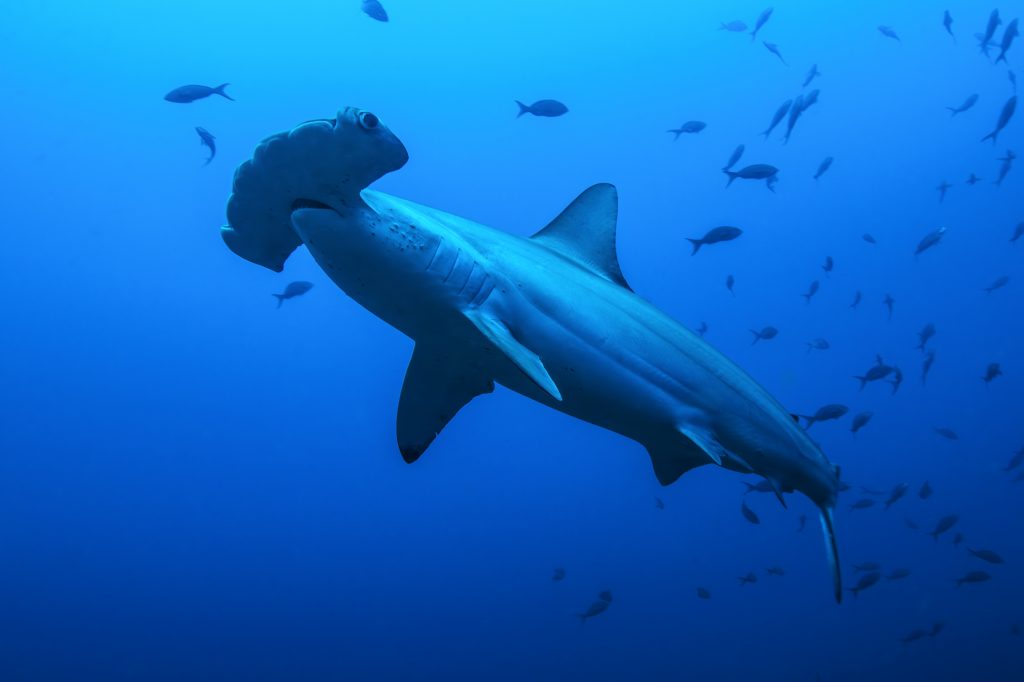
Few animals in the ocean look as unmistakable and hammerhead shark diving delivers one of the most unique encounters underwater. That wide and flattened head is called a cephalofoil. It is one of evolution’s stranger experiments, and it works. The shape spreads a hammerhead’s electroreceptors across a much wider area than a typical shark’s snout, giving them an almost superhuman ability to detect the faint electrical signals of prey hiding under sand. It also pushes their eyes out to the sides, giving them a nearly 360-degree field of vision. This is so they can watch above and below themselves at the same time.
Great hammerheads are the giants of the family, capable of growing past 13 feet, while scalloped hammerheads run smaller but are the ones most famous for their schooling behavior. And that’s really the headline feature for divers. Where most sharks are loners, scalloped hammerheads gather by the dozens or even hundreds around seamounts and remote offshore pinnacles, circling in tight formation in a display that looks more like a nature documentary than something you’d expect to see with your own eyes underwater.
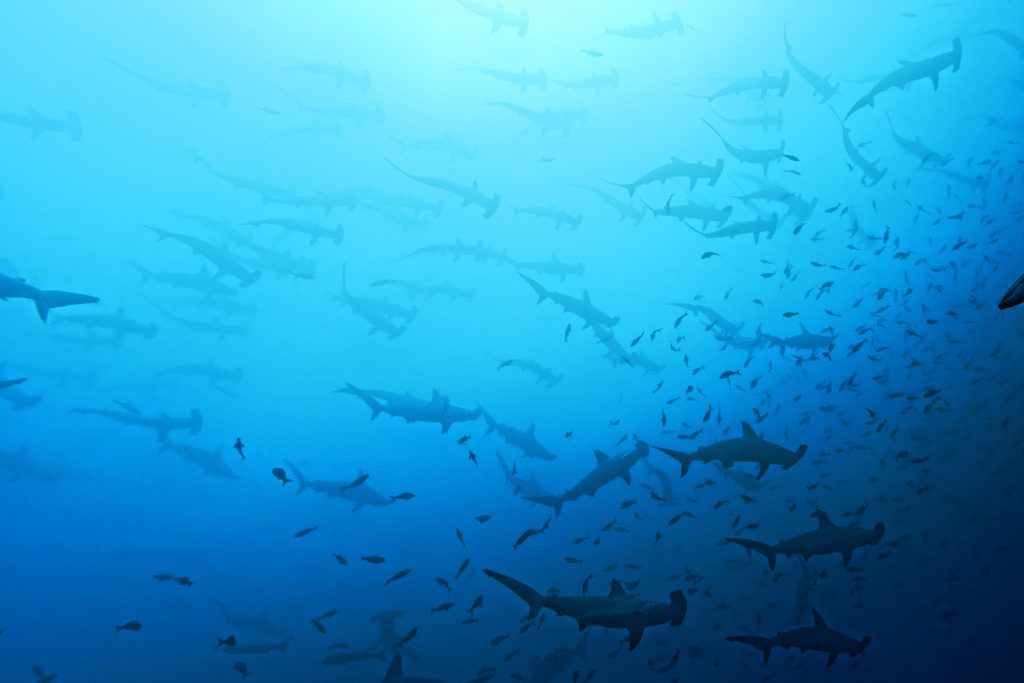
Nobody fully agrees on why they school this way. Some researchers think it’s about safety in numbers, others point to mating behavior, and some think the sharks use the group to navigate along magnetic field lines between feeding grounds. Whatever the reason, hammerhead schools tend to show up in a short list of places worldwide, usually near deep-water seamounts where cooler, nutrient-rich water wells up. Two of the best are Cocos Island, Costa Rica, and the Galapagos Islands, and Aggressor runs liveaboards to both.
Cocos Island Aggressor & Okeanos Aggressor II at Cocos Island
Cocos Island is about as remote as diving gets. It sits 342 miles off Costa Rica’s Pacific coast, a lush, uninhabited island surrounded by rocky pinnacles that draw in big pelagic life from the open ocean. It’s one of the most reliable places on the planet to encounter schooling hammerheads, and they’re far from the only draw. White-tip reef sharks pack the seafloor at some sites, mantas glide overhead, tuna move through in packs, and whale sharks make regular appearances too.
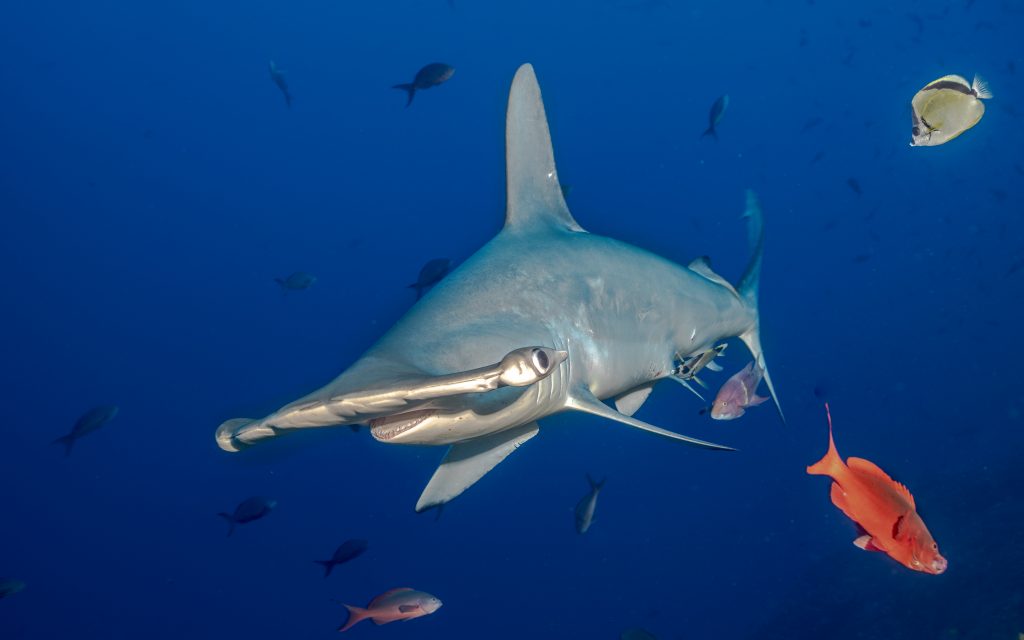
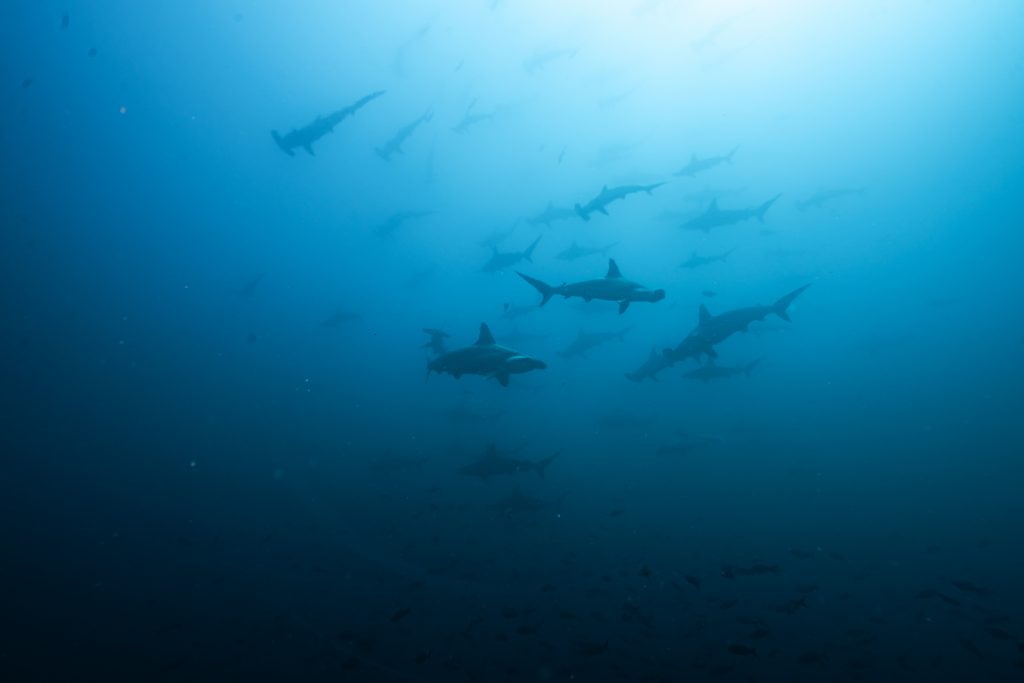
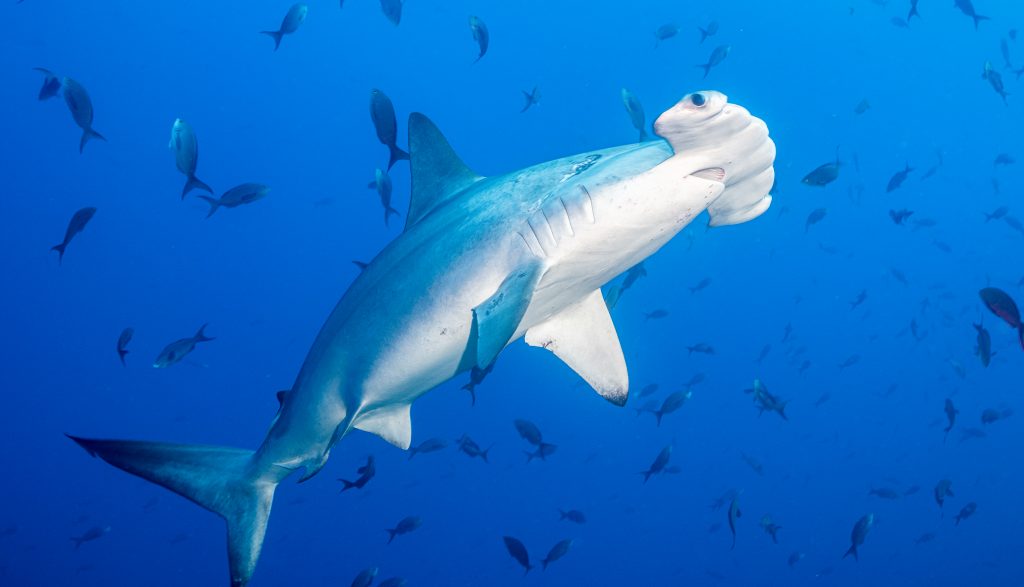
Getting there is part of the experience. The Cocos Island Aggressor and Okeanos Aggressor II both depart from Puntarenas and spend about 36 hours crossing open water before reaching the island, so this is a trip for divers who want the remote, wild version of shark diving. Once you’re there, dives run 55 to 110 feet deep, water temperatures sit in the 72 to 82°F range, and every dive launches from a tender since there’s no shore access. Aggressor has been running trips to Cocos since 1988, and with two liveaboards now serving the destination, there’s more flexibility than ever to find the right dates for a hammerhead-focused trip.
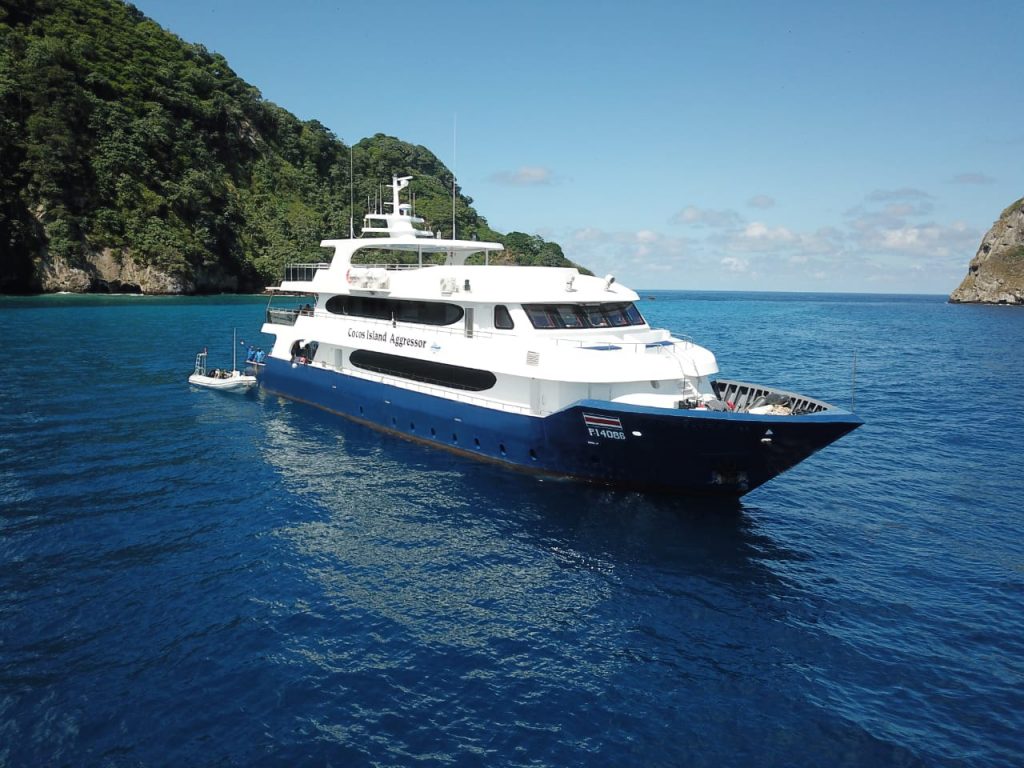
COCOS ISLAND AGGRESSOR 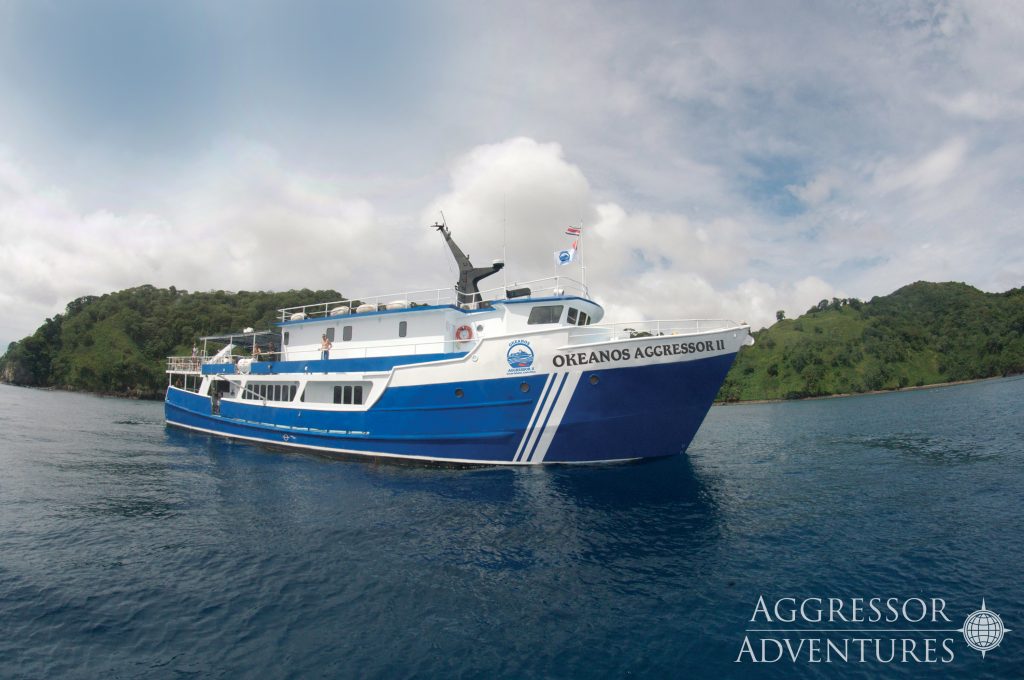
OKEANOS AGGRESSOR II
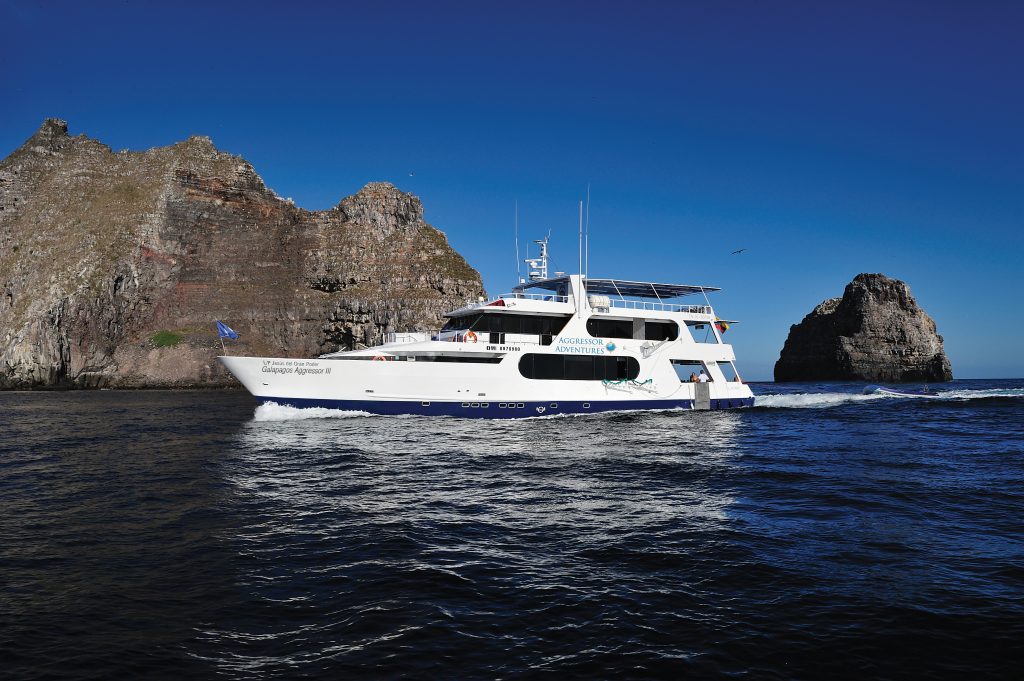
Galapagos Aggressor III at Darwin and Wolf
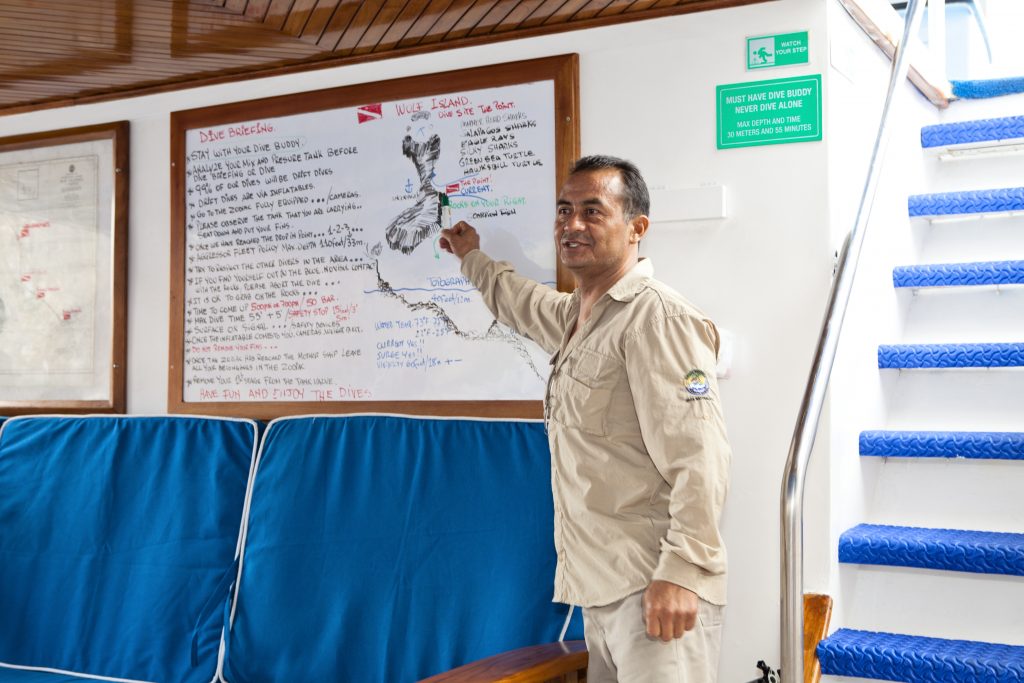
The Galapagos Islands are famous above the waterline for finches and giant tortoises, but the diving here holds its own against any big-animal destination in the world. The signature trip is a journey out to Darwin and Wolf Islands, where schooling hammerheads gather in numbers that rival anywhere on earth. Playful sea lions tend to steal the show in between shark encounters, darting in for a closer look at divers with zero hesitation.
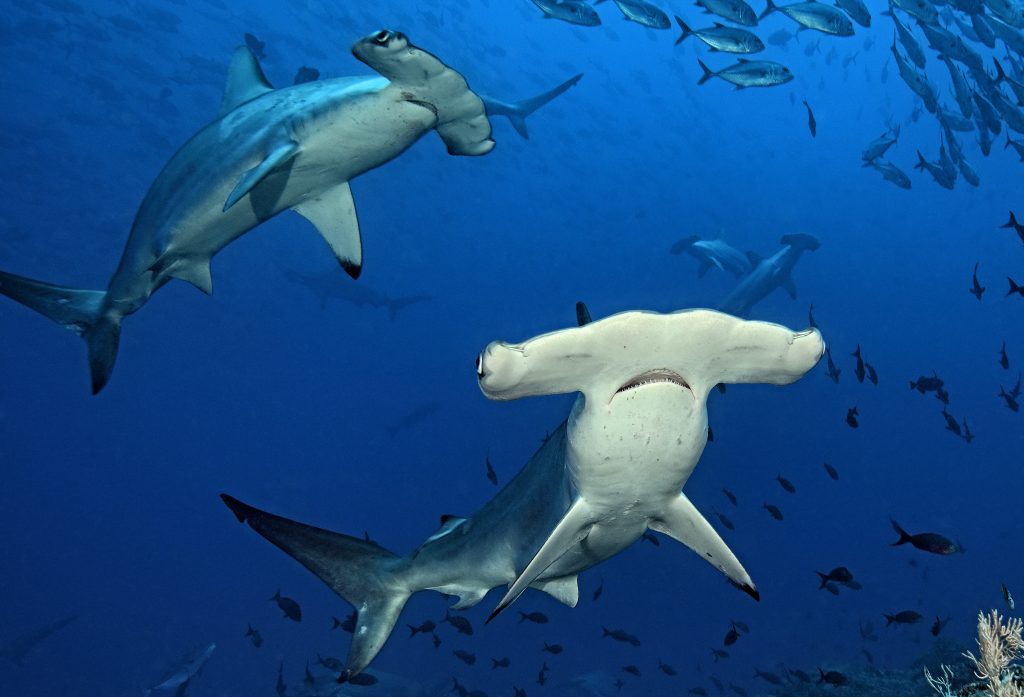
The hammerhead populations here are protected by design. In 2016, Ecuador established a marine sanctuary around Darwin and Wolf covering 15,000 square miles, closed entirely to fishing specifically to protect the sharks that congregate there, and roughly a third of all Galapagos waters are now off-limits to fishing.
Aboard the Galapagos Aggressor III, charters run four dives a day plus two land excursions per week, with depths from 40 to 130 feet. Time it right and the season makes a real difference: December through May brings warmer, clearer water and the biggest hammerhead schools, while June through November runs cooler with better odds of whale sharks passing through. Aggressor has sailed the Galapagos since 1993, and every charter follows the same National Park-approved route to Darwin and Wolf.
Why Dive Aggressor for Hammerhead Shark Diving
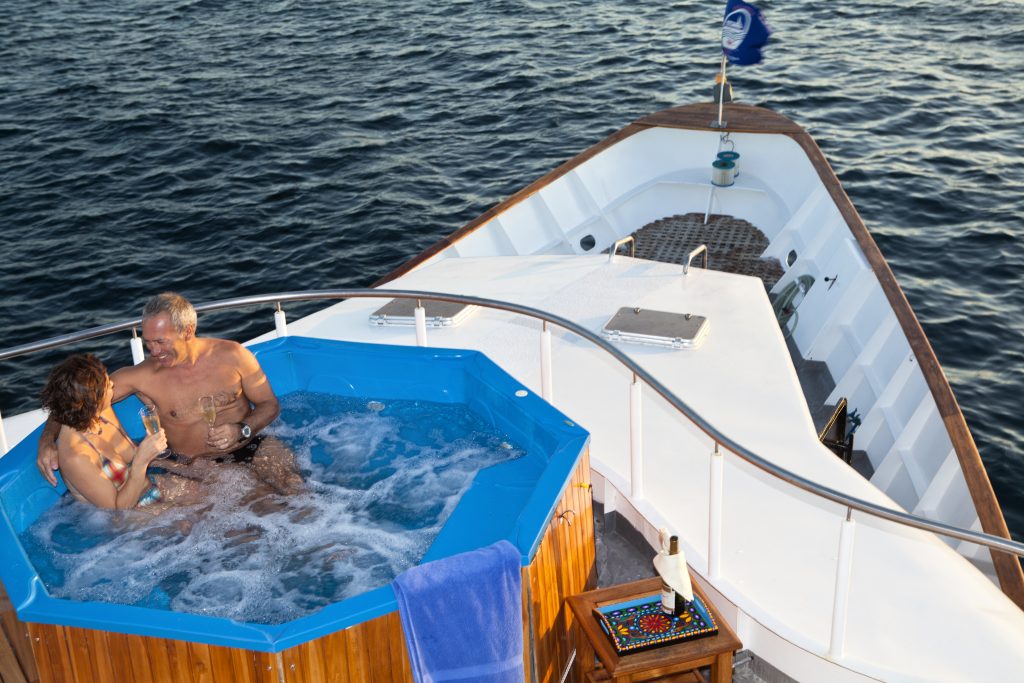
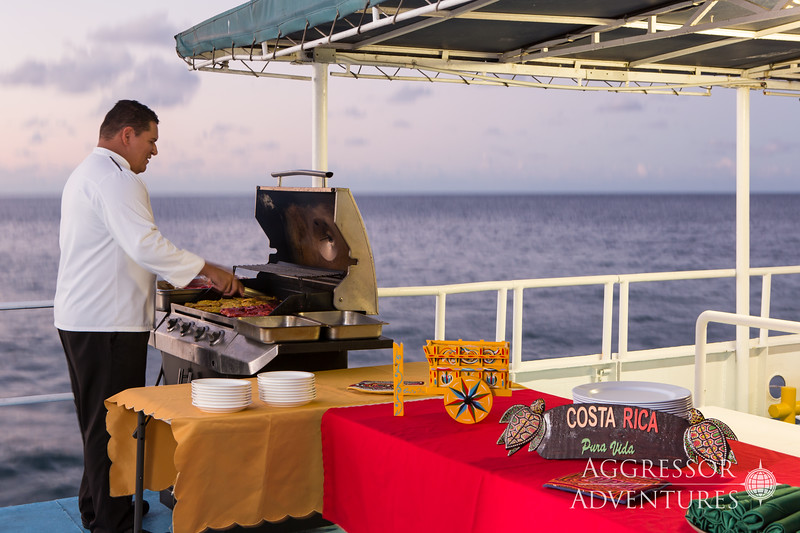
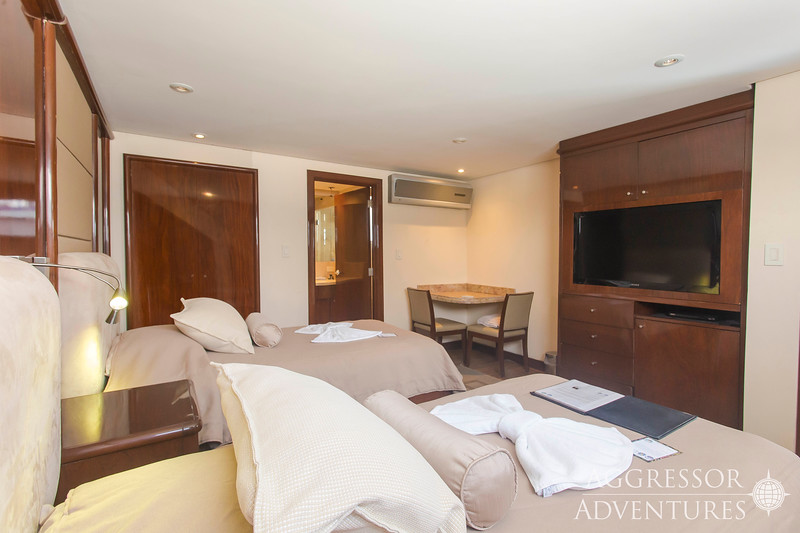
Whichever itinerary calls to you, what stays consistent is the experience once you’re onboard. Aggressor has been running hammerhead shark diving liveaboards for decades, and there’s a reason so many divers keep coming back trip after trip. It comes down to the small things: the crew remembering your coffee order by day two, gear rinsed and ready before you think to ask, a warm towel waiting after a chilly morning dive.
Luxury on a liveaboard isn’t about marble countertops. It’s measured by thoughtful service, experienced crews, exceptional diving, and the confidence that every detail has been taken care of. That’s what we build every charter around, whether you’re chasing schooling hammerheads at Cocos Island or watching them glide past Darwin and Wolf in the Galapagos. Either way, you’re in good hands.
Ready to see hammerheads for yourself? Whether you’re drawn to the remote shark density of Cocos Island or the hammerhead schools and sea lions of the Galapagos, Aggressor offers unforgettable opportunities to dive alongside one of the ocean’s most unmistakable predators. Explore the Cocos Island itinerary aboard the Cocos Island Aggressor or Okeanos Aggressor II, or browse upcoming Galapagos Aggressor III departures to find your next adventure.