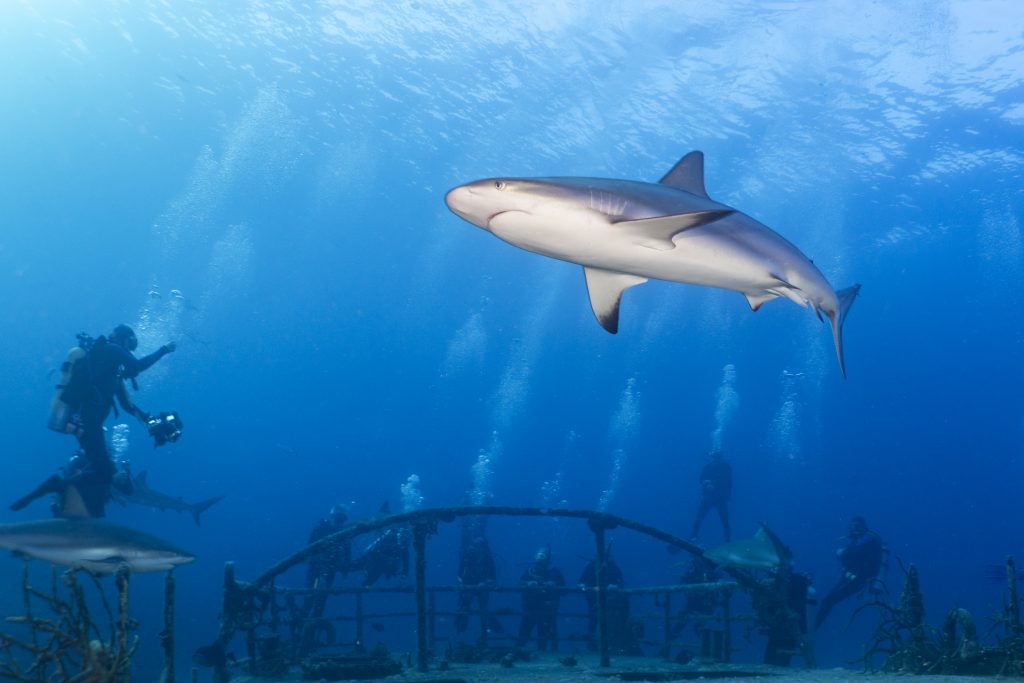
At Aggressor Adventures, we have a saying: There are two kinds of divers, those who love diving with sharks and those who simply haven’t dived with them yet. No matter which one you are, Aggressor Adventures has the Adventure of a Lifetime waiting for you! Whether you crave the thrill of swimming beside a whale shark, dream of watching a massive school of hammerheads glide past, or you just want to explore colorful coral reefs complete with apex predators, shark diving safety is built into every dive at one of Aggressor’s liveaboard diving destinations!
At Aggressor Adventures, sharks get us excited, too. Our experienced staff ensures that every guest dives with sharks in a safe, respectful, and sustainable way, making shark safety a natural part of the experience.
Shark Diving Safety: Encounters Across Our Aggressor Adventures Destinations
While it’s important to be safe around sharks, sharks are far less dangerous than their reputation suggests. Consider this, urban-legend has it that 150 people are killed every year by falling coconuts, while sharks are responsible for only 5 to 10 deaths annually. That means that coconuts are actually more dangerous than sharks! And for every human killed by a shark, about two million sharks are killed by humans. So who’s the predator?
Good shark safety begins with respect and understanding. Aggressors liveaboard crews brief guests before every dive, guiding you on how to observe these animals calmly and keep encounters positive for both the divers and the sharks. When you understand the behavior of the species sharing the reef, watching sharks becomes one of the most rewarding experiences of your Liveaboard® dive trip with Aggressors.
Sharks of the Reefs: A Destination-by-Destination Guide to Liveaboard Shark Watching
One of the joys of Liveaboard travel is discovering how the cast of characters changes from one corner of the world to the next. Here are the resident sharks to watch and dive with in reefs across our liveaboard destinations:
- Bahamas: Caribbean Reef Sharks, Nurse Sharks, plus Tiger and Lemon Sharks at famous Tiger Beach
- Belize: Caribbean Reef Sharks, Nurse Sharks, Bull Sharks
- Cayman Islands: Caribbean Reef Sharks, Nurse Sharks
- Cocos Island: Schooling Hammerheads, Whale Sharks, Galapagos Sharks, Whitetip, Silky, and Tiger Sharks
- Galapagos: Schooling Hammerheads, Whale Sharks, Galapagos Sharks, Whitetip and Silky Sharks
- Indonesia: Whitetip, Blacktip, and Whale Sharks
- Maldives: Whitetip, Blacktip, Silvertip, Whale Sharks, Leopard, and Tiger Sharks
- Palau: Grey Reef Sharks, Silvertip Sharks
- Philippines: Whitetip, Blacktip, Silvertip, Tiger, Bigeye Thresher, Bamboo, and Cat Sharks
- Raja Ampat: Grey Reef Sharks, Blacktip, Whitetip, Whale Sharks, Wobbegongs
- Red Sea: Thresher, Whitetip, Hammerhead, Grey Reef, and Oceanic Whitetip Sharks
- Roatan: Caribbean Reef Sharks, Nurse Sharks, Hammerheads
- Thailand: Grey Reef Sharks, Leopard Sharks, Coral Cat Sharks, Whale Sharks
- Turks and Caicos: Caribbean Reef Sharks, Nurse Sharks
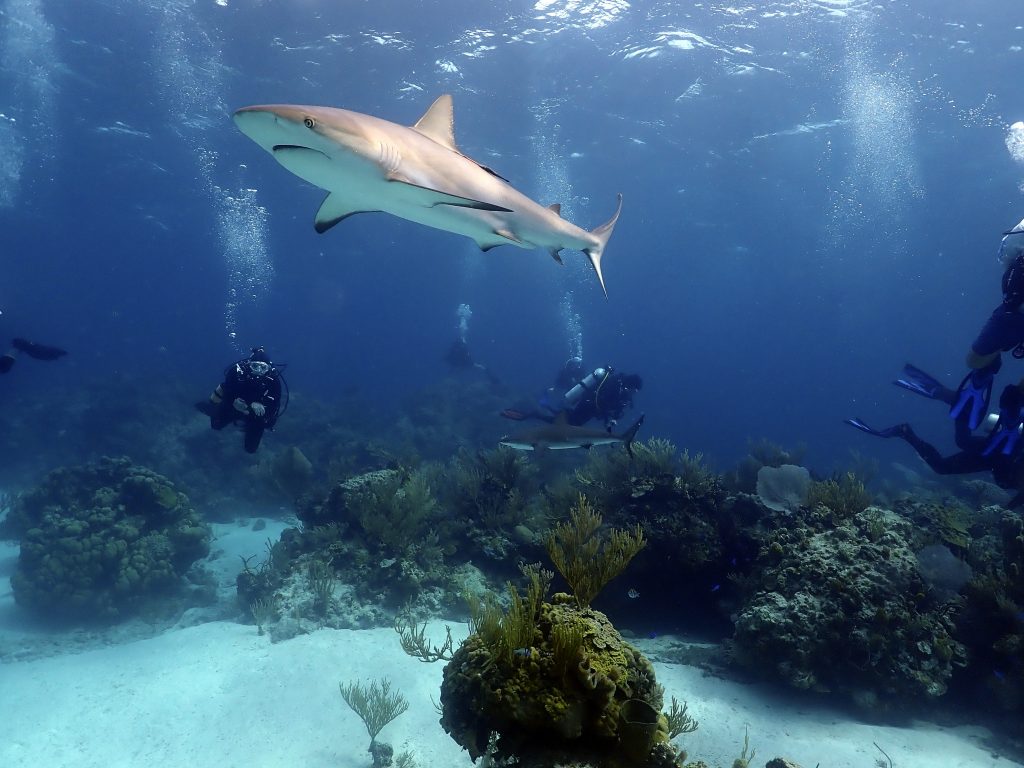
Caribbean Reef Shark 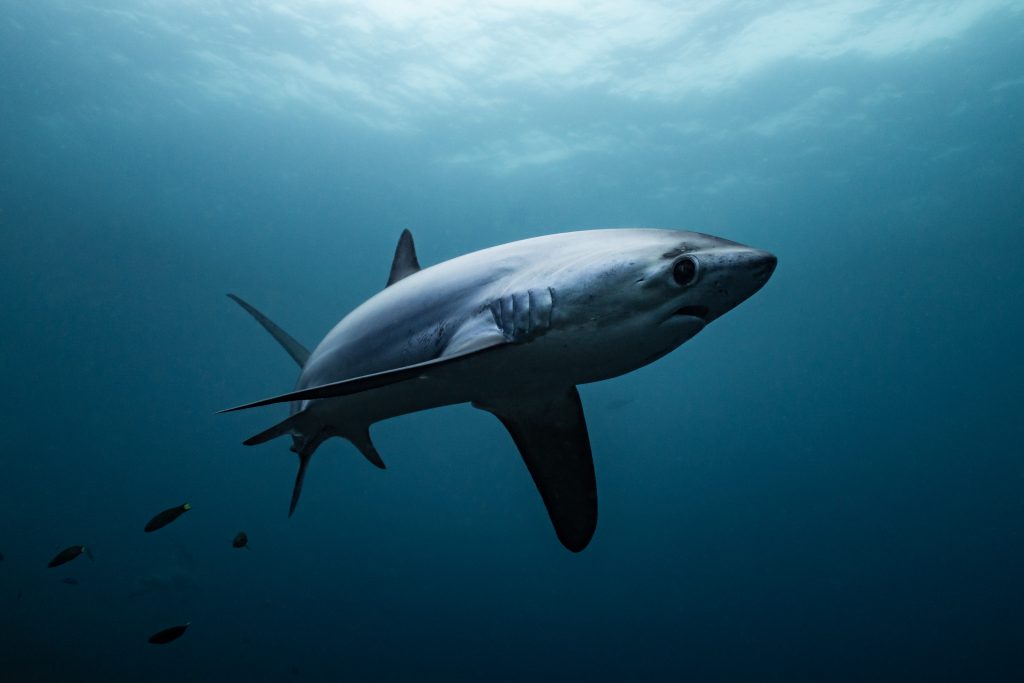
Thresher Shark 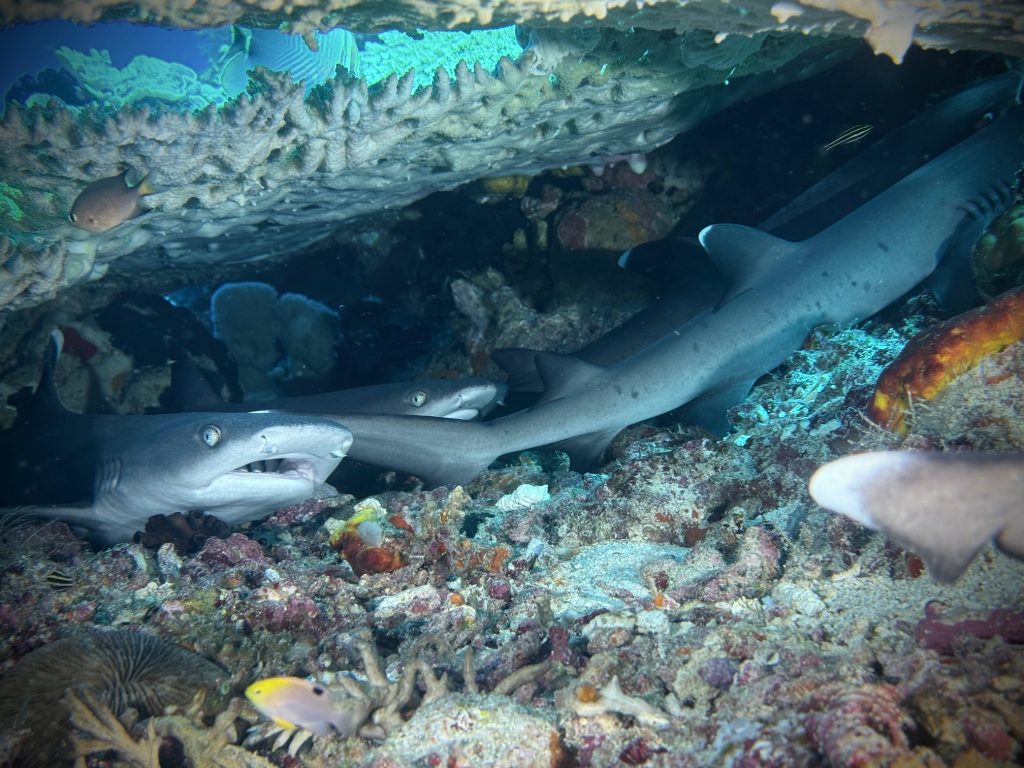
White Tip Reef Sharks 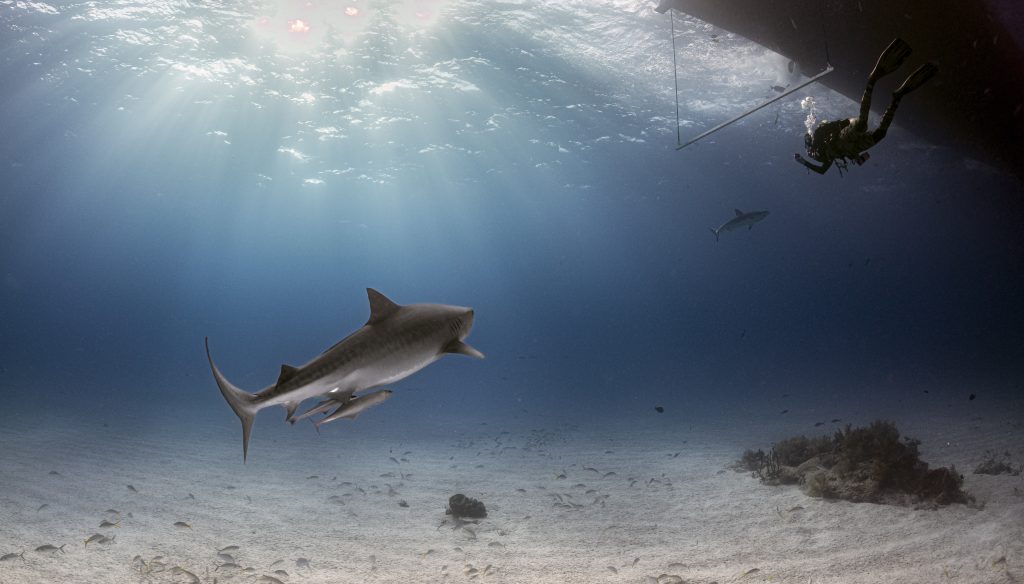
Tiger Shark
Timing Your Trip: When to See the Big Migratory Sharks
Many sharks can be spotted year-round in their preferred habitats, but some of the larger, migratory sharks travel with the seasons to our different livaboard destinations. To improve your chances of an unforgettable shark encounter, plan around these windows:
- Whale Sharks: Cocos and Galapagos: May to August; Indonesia: April and May
- Schooling Hammerheads: Cocos: June through September; Galapagos: June through November; Red Sea: May to July
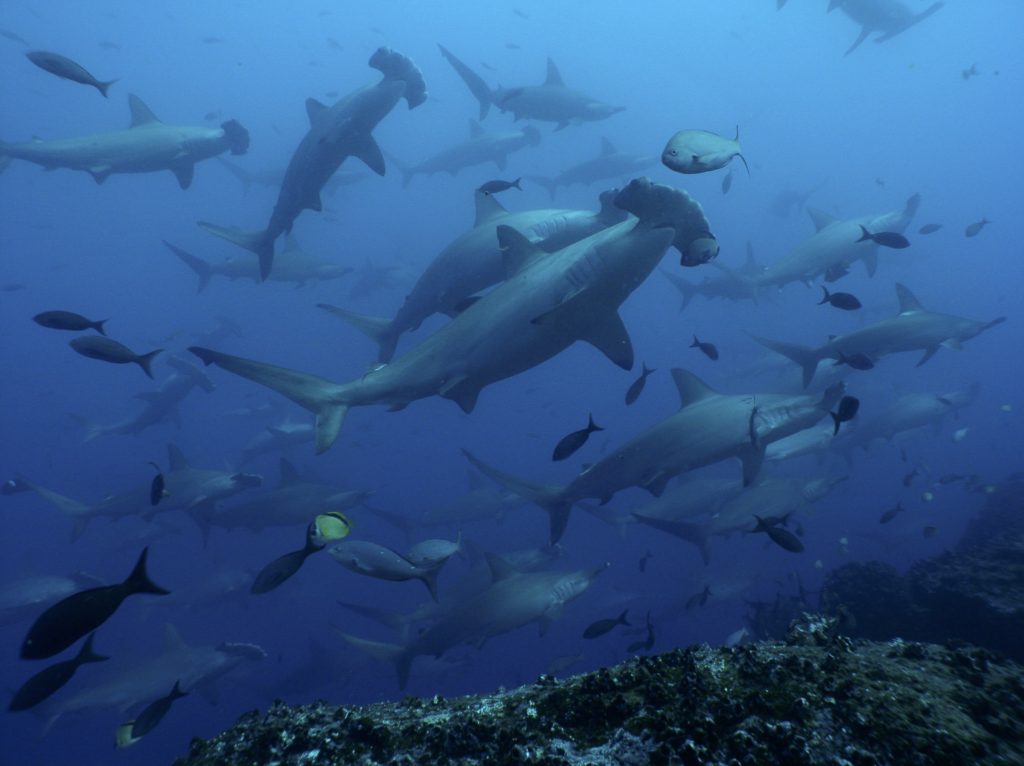
Schooling Hammerheads 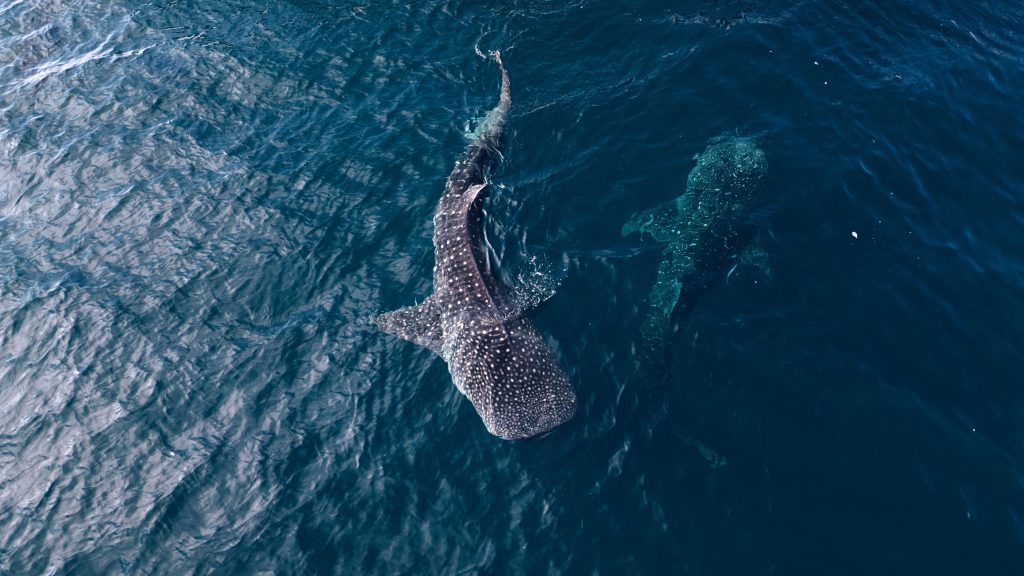
Whale Sharks
Fascinating Shark Facts
Sharks are endlessly intriguing animals. A few favorites from our liveaboard crews:
- Whale sharks produce the largest eggs of any animal on land or sea. The largest egg recorded measured 14 inches in diameter. They are ovoviviparous, meaning internal eggs hatch inside the mother’s body so she gives birth to live young.
- Bull sharks are born in fresh water and, once mature, move freely between ocean and freshwater environments.
- The Moses sole is one of the rare fish that sharks cannot eat. When bitten, it releases a chemical that makes the shark let go. Scientists are studying it as a natural shark repellent.
- The Tiger Shark is nicknamed the “garbage can of the sea” for its ability to ingest almost anything.
- The word “shark” first appeared in English in 1569. Before that, sailors used “sea dog” or the Spanish tiburón.
Dive In With Aggressor
Sharks are a vital sign of a healthy ocean, and there is no better way to watch or meet sharks than aboard an Aggressor Liveaboard, where comfort, expertise, and adventure come together. With our seasoned liveabord crews leading the way, you can experience the magic of sharks in reefs around the world, safely, sustainably, and unforgettably.
Whichever kind of diver you are, your shark encounter is waiting at an Aggressor liveaboard destination. Book your trip now and prepare to embark on the Adventure of a Lifetime with Aggressor Adventures!