October is the season for costumes, disguises, and creatures that look like they belong in another world. But beneath the surface of the ocean, one animal has been perfecting the art of disguise for millions of years.
Meet the frogfish.
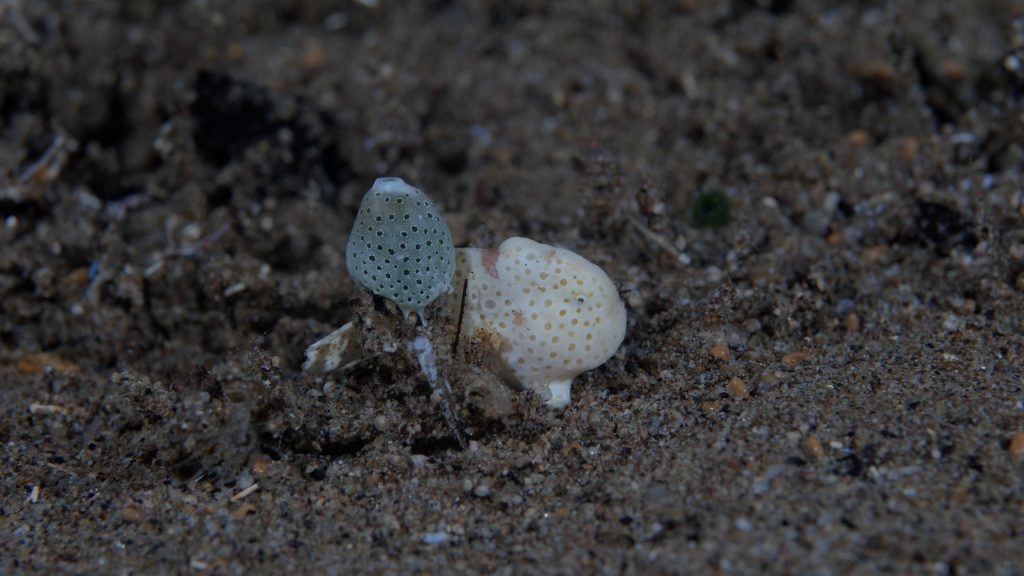
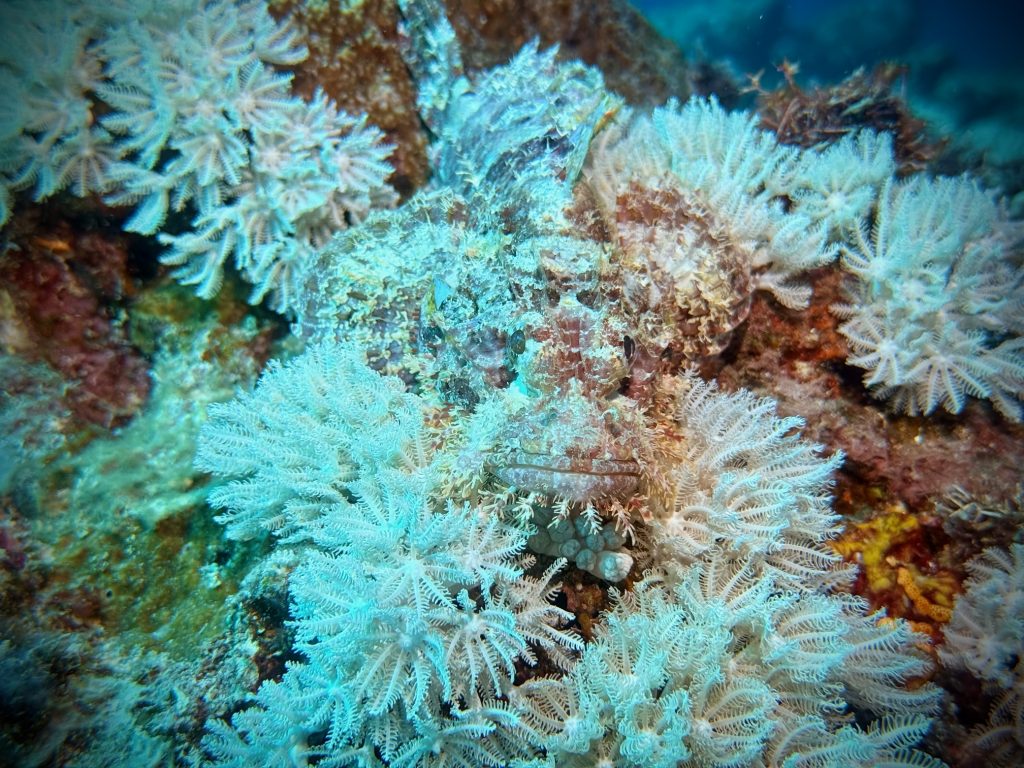
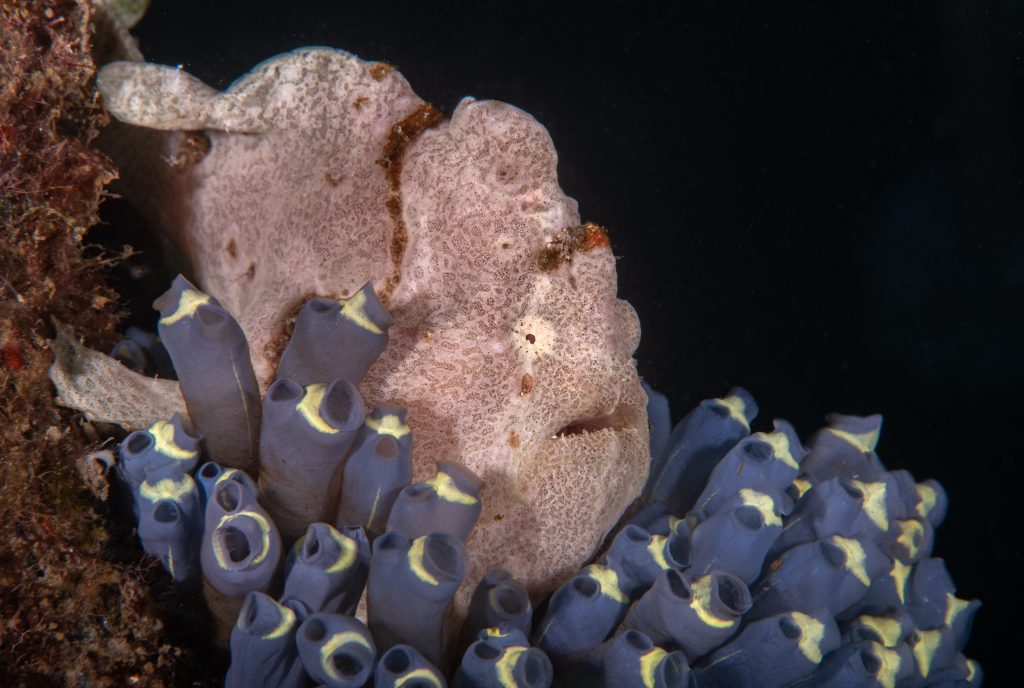
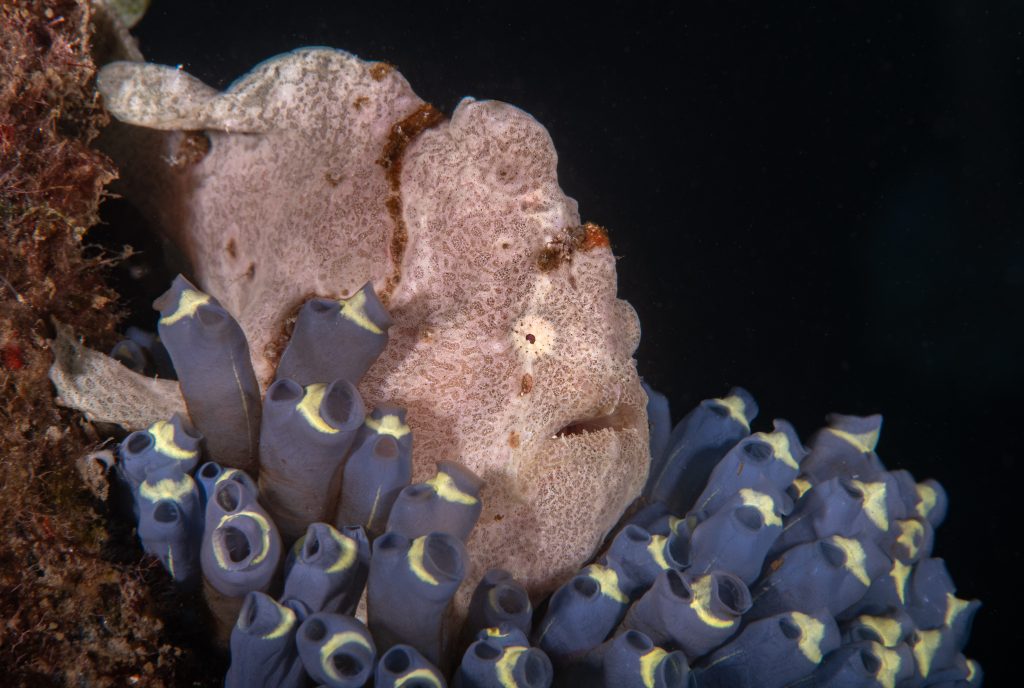
Lumpy, unusual, and sometimes nearly impossible to spot, frogfish are among the ocean’s most fascinating ambush predators. Depending on the species and surroundings, they can look like a sponge, a piece of coral, algae, or simply another part of the reef. Some are bright yellow or orange. Others are covered in bumps, spots, strange markings, or hairlike appendages. And while their appearance may be strange enough for Halloween, their hunting abilities are even more impressive.
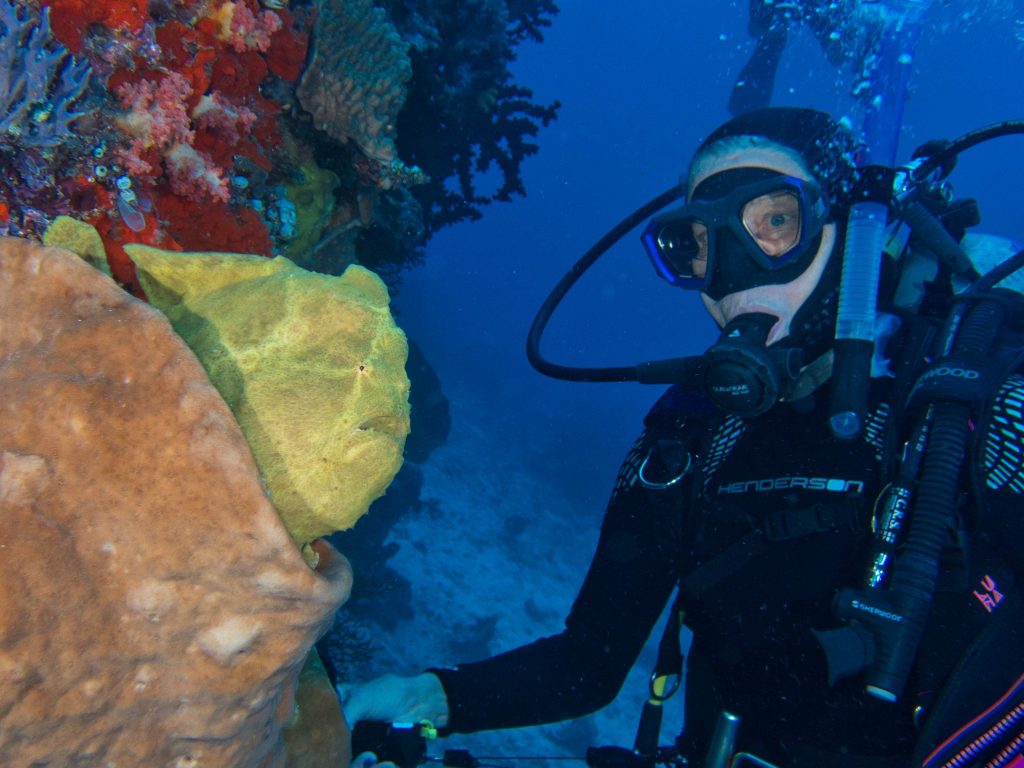
For divers, frogfish diving can turn an ordinary moment on the reef into one of the most memorable sightings of a dive. You can stare directly at one without realizing what you are looking at, only for a dive guide to point out a mouth, an eye, or the faint outline of a fin.
This October, we are shining the Creature Feature spotlight on one of the reef’s greatest masters of disguise.
What Is a Frogfish?
Despite the name, a frogfish is, of course, a fish. Frogfish belong to the family Antennariidae and are relatives of other anglerfish. Unlike the deep-sea anglerfish many people picture when they hear that name, frogfish are commonly associated with tropical and subtropical reefs, rocky areas, and other relatively shallow marine habitats.
What makes them especially unusual is the way they hunt.
Instead of chasing prey around the reef, frogfish are built for patience. Their camouflage lets them sit remain almost motionless, unnoticed, while small fish and crustaceans move nearby. Above the frogfish’s mouth is one of its most fascinating adaptations: a modified dorsal fin spine called the illicium. At the tip is a fleshy lure known as the esca.
Think of it as a built-in fishing rod.
The frogfish can move this lure so that it resembles a small worm, shrimp, fish, or another tempting meal. When curious prey moves closer to investigate, the frogfish strikes. Smithsonian describes frogfish as ambush predators that use these specialized lures to bring prey directly within range of their mouths.
And when a frogfish finally decides to strike, slow and patient suddenly becomes incredibly fast. Their mouths rapidly expand to create suction, drawing prey inside in only milliseconds. Smithsonian notes that a frogfish can consume prey in roughly six milliseconds, making the attack almost impossible to follow with the human eye.
For an animal that spends so much time appearing to do absolutely nothing, the frogfish is an extraordinarily effective hunter.
What Does a Frogfish Look Like?
There is no single answer.
That is part of what makes finding one so much fun.
Frogfish are generally short, stocky and oddly shaped, with large mouths, small gill openings and modified fins that can look more like limbs than traditional fish fins. Their skin may appear smooth, covered in bumps, decorated with spots or draped in hairlike structures.
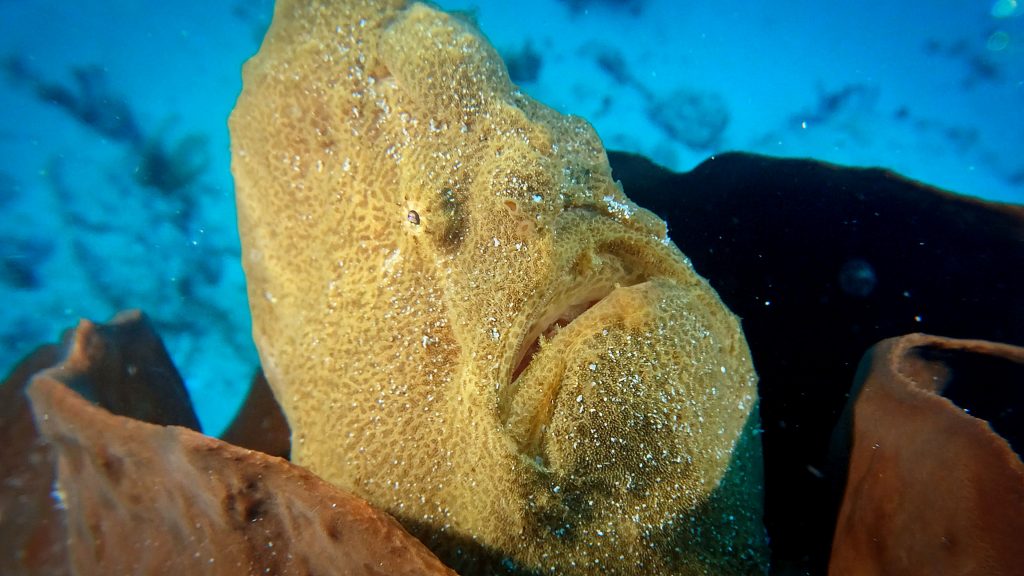
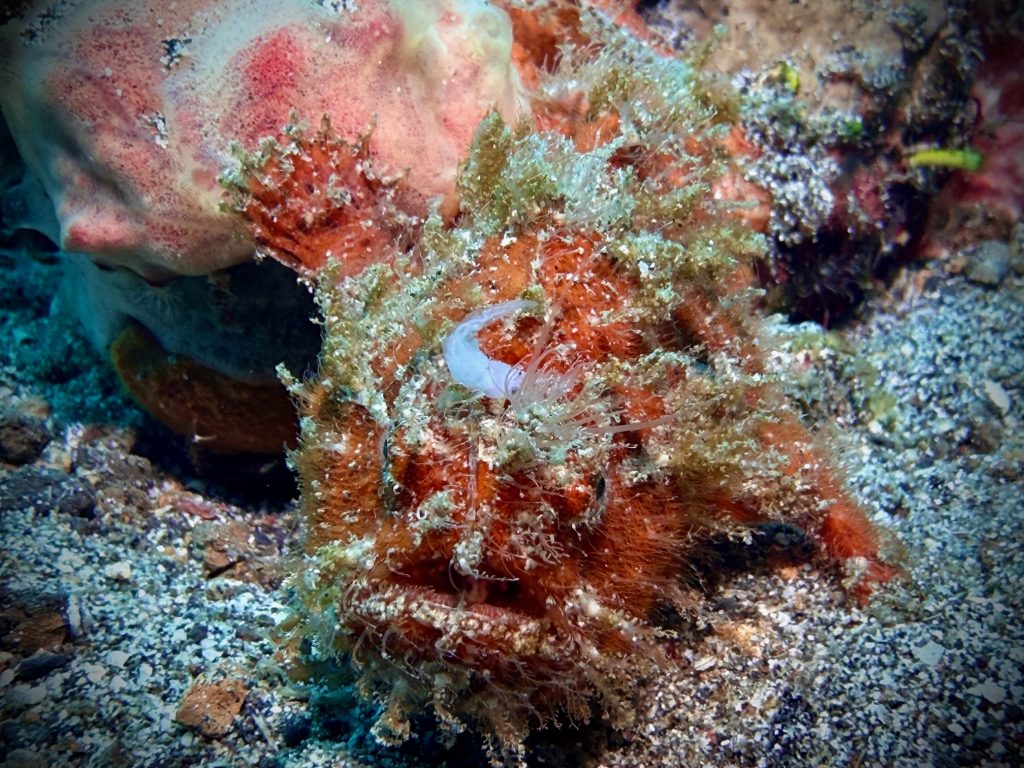
Colors can include yellow, orange, red, brown, white, green, black, and combinations of several shades. Some species can gradually alter their coloration to better match their surroundings.
The result is camouflage so convincing that a frogfish can disappear against a sponge or reef even when sitting completely exposed.
The giant frogfish, or Commerson’s frogfish, is a perfect example. The species can occur in a variety of colors and patterns and is often associated with sponges and reefs. FishBase records the species throughout a huge portion of the Indo-Pacific and into the eastern Pacific, including areas relevant to several Aggressor destinations.
Other species take camouflage even further. The warty frogfish can resemble the uneven surface of a sponge, while the hairy or striated frogfish can be covered in projections that help it disappear among algae and other growth.
It is the kind of animal that rewards divers who slow down and look closely.
Wait… Do Frogfish Walk?
They do, or at least they come surprisingly close.
Frogfish are capable of swimming, but swimming is not always their preferred way to get around. Instead, their muscular pectoral and pelvic fins allow them to move across the bottom in a motion that looks remarkably similar to walking.
According to the Natural History Museum, frogfish can use different walking motions, including one in which their pectoral fins support much of their body while they shift forward across the substrate. When they need a quicker escape, some frogfish can even use a form of jet propulsion by taking water into their mouths and forcing it through small gill openings behind the pectoral fins.
Watching one move can be almost as entertaining as finding it.
A frogfish may spend a long period perfectly still and then suddenly begin lumbering across the bottom on fins that look more like tiny arms and legs.
It is strange. It is fascinating. And it somehow makes the frogfish even more appropriate for an October Creature Feature.
Where to Go Frogfish Diving with Aggressor
There are animals you travel halfway around the world hoping to see because of their enormous size. Whale sharks, manta rays, and hammerheads can command everyone’s attention the moment they appear.
Frogfish offer a completely different kind of experience.
Finding one is often about patience.
A liveaboard dive adventure gives divers repeated opportunities to explore a destination, visit different underwater environments and spend more time looking beyond the most obvious marine life. One dive might be about sharks, rays,or schooling fish. The next may be spent searching a reef, sponge garden, or sandy slope for the tiny and unusual creatures hiding in plain sight.
That is where an experienced dive team can make a huge difference.
Someone familiar with a dive site may recognize the kinds of habitats frogfish prefer and notice the smallest clues. Once a guide points one out, there is often that wonderful moment when a shape that looked like part of the reef suddenly becomes a fish.
For underwater photographers, frogfish can be especially rewarding subjects. Because they often rely on remaining still instead of immediately fleeing, divers may have an opportunity to observe their incredible textures, unusual faces, and camouflage techniques up close. Give it room, though. Never touch, move or prod a frogfish to get a better angle for a photo. Keeping your distance lets it behave naturally and gives other divers the chance to enjoy the encounter too.
Frogfish sightings show up again and again in the adventure logs kept aboard Aggressor yachts. Here are some of the destinations where these masters of disguise are most likely to become part of the adventure.
Indonesia: Frogfish Diving in the Heart of the Coral Triangle
Indonesia is one of the most biologically diverse marine regions on Earth, making it an ideal place to search for both spectacular large animals and the unusual creatures hiding among the reefs.
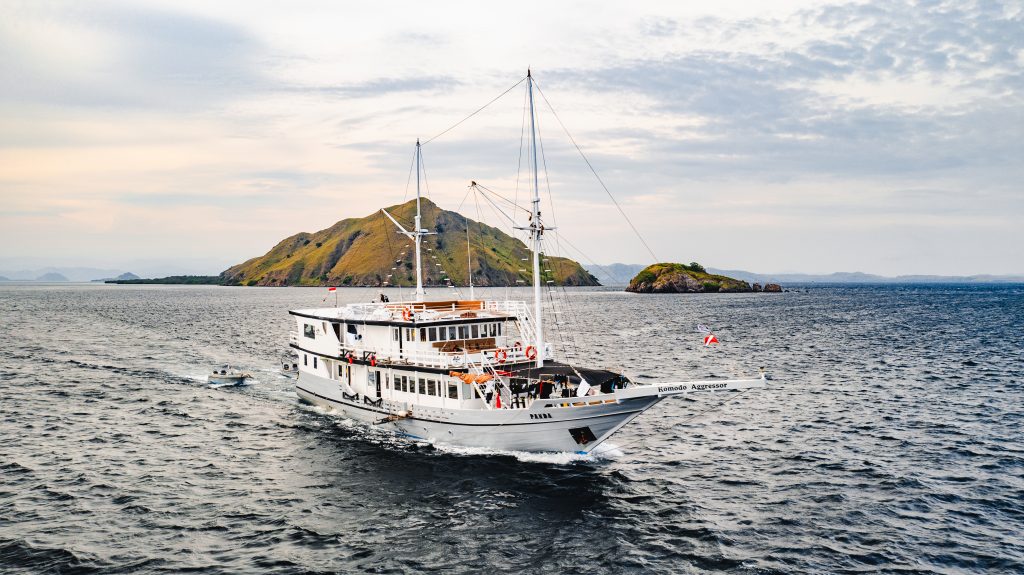
Aggressor offers two very different ways to explore Indonesia aboard the Komodo Aggressor and the Raja Ampat Aggressor.
Komodo Aggressor
Komodo is famous for dramatic underwater landscapes, colorful reefs, manta encounters and, above the water, the legendary Komodo dragon. But look closer and there is an entirely different world waiting for macro lovers.
Frogfish here come in all shapes and sizes, from giant frogfish wedged against the reef to smaller species tucked into sponges and rubble on macro-rich dive sites.
That variety is part of what makes diving this region so exciting. A day can include current-swept reefs filled with schooling fish and mantas, followed by a slower dive where the challenge becomes finding an animal that would rather look like part of the scenery.
Aboard the Komodo Aggressor, keep your eyes on the sponges, rubble, and reef structures. Something looking back at you might have been there the entire time.

Komodo Aggressor
Raja Ampat Aggressor
If there is anywhere a master of disguise should feel at home, it is within the overwhelming biodiversity of Raja Ampat.
Located in the heart of the Coral Triangle, Raja Ampat is known for an extraordinary concentration of coral and fish life. The region is home to approximately 600 types of coral, 1,500 fish species, and more than 600 types of mollusks.
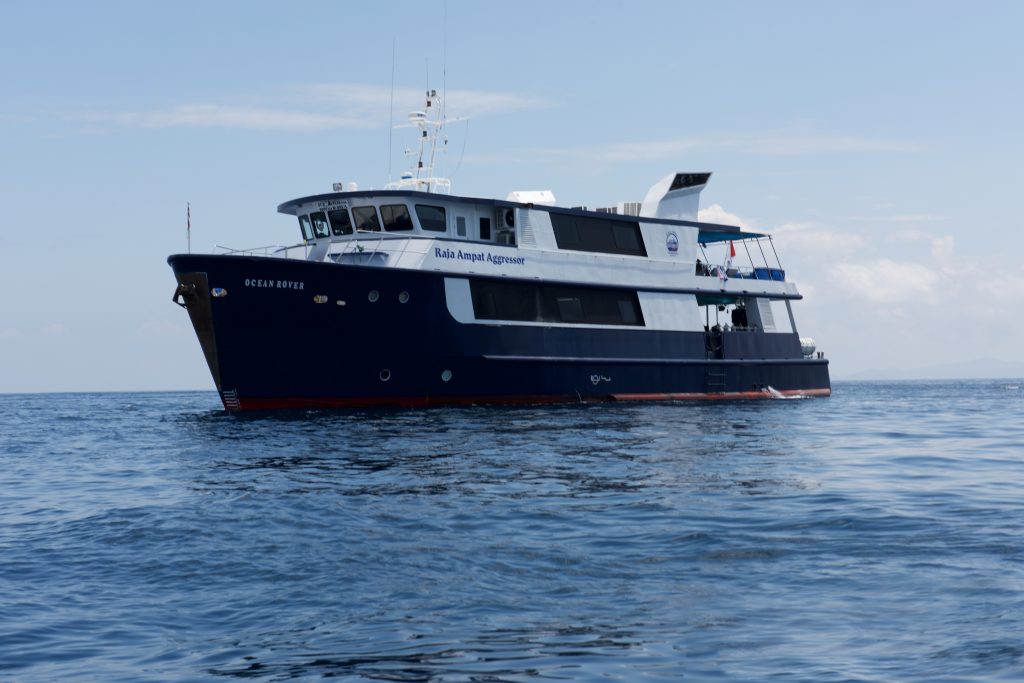
Aboard the Raja Ampat Aggressor, divers can explore a destination famous not only for its colorful reefs and schooling fish but also for its macro life. Frogfish are among the unusual creatures found in the region’s macro-rich areas, alongside ghost pipefish, blue-ringed octopus and a variety of shrimp.
In an ecosystem with so many colors, textures, and shapes competing for your attention, spotting a perfectly camouflaged frogfish can feel like completing an underwater scavenger hunt.
Raja Ampat Aggressor 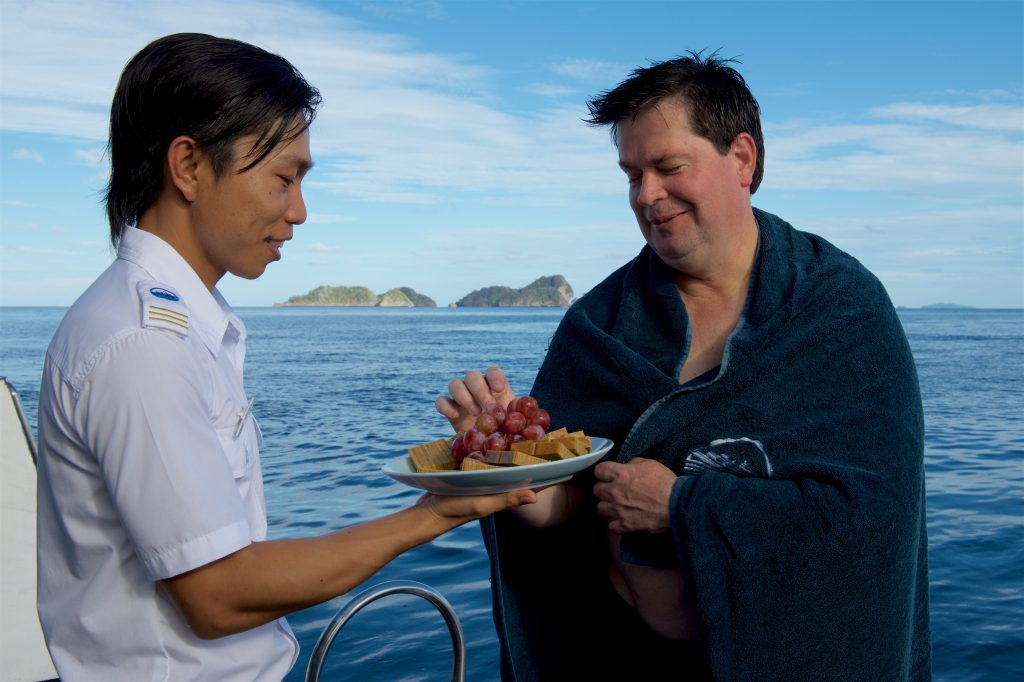
Philippines: A Frogfish Lover’s Playground
The Philippines offers an incredible combination of big animal encounters and world-class macro diving. For frogfish fans, it may be one of the most exciting destinations on this list, with everything from giant frogfish to juveniles no bigger than a fingernail.
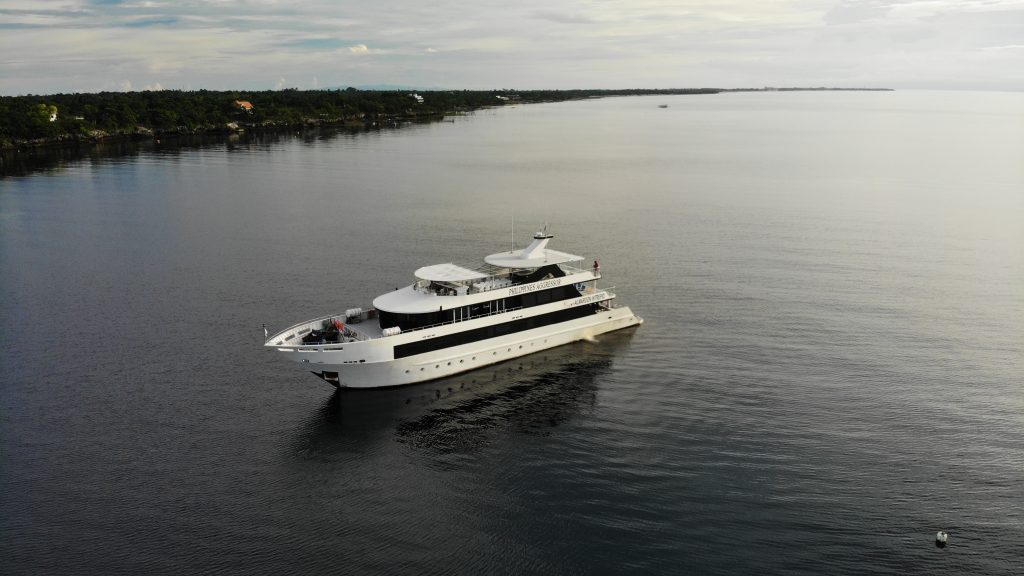
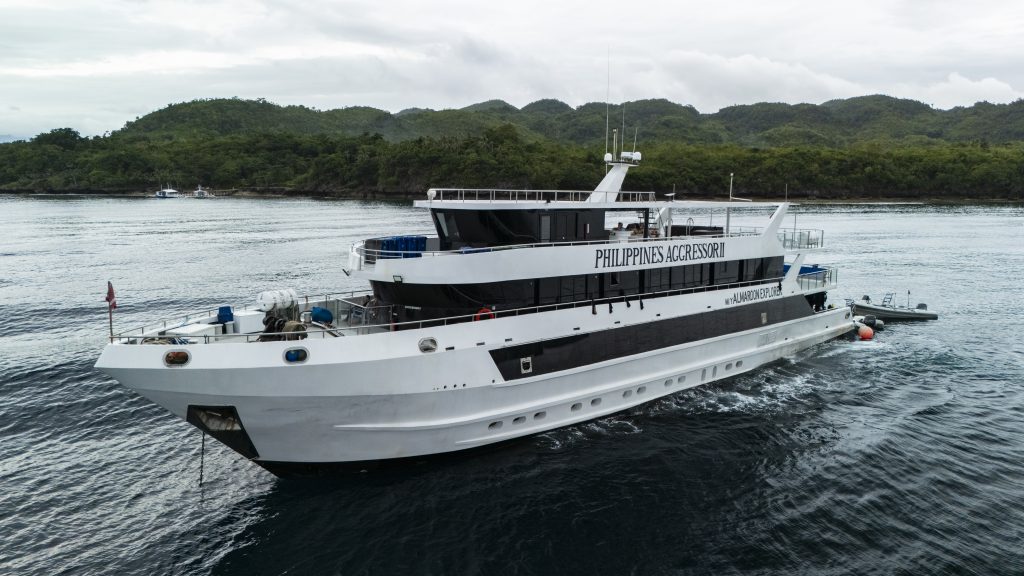
Aggressor explores the Philippines aboard both the Philippines Aggressor and the Philippines Aggressor II, and each yacht offers its own take on the hunt. Alongside frogfish, divers may encounter nudibranchs, ghost pipefish, seahorses,and other unusual bottom dwellers.
Philippines Aggressor
The Philippines Aggressor pairs two of the country’s most distinctive dive regions: Coron and Batangas.
Coron is famous for its World War II wrecks, now draped in coral and sponges after decades underwater. It is easy to get absorbed in cargo holds and engine rooms, but those coral- and sponge-covered surfaces encourage divers to slow down and look closely for smaller marine life hiding among the growth.
Batangas brings the macro side into focus. Anilao, on the Batangas coast, is one of the world’s most celebrated macro destinations and is known for frogfish in a remarkable range of colors and sizes, including hairy, painted, and giant frogfish.
That is exactly what makes macro diving so addictive. Sometimes the most exciting animal on the dive is not the largest. It may be a tiny predator tucked into a sponge that everyone would have passed without a careful look.

Philippines Aggressor
Philippines Aggressor II
The Philippines Aggressor II delivers its own impressive frogfish variety, with painted, giant, and warty frogfish all part of the mix. Some dives reveal a single frogfish resting quietly along a reef slope. On others, divers have found several giant frogfish at once.
For divers who love the challenge of spotting unusual marine life, the Philippines can transform every dive into a search for the next hidden surprise.
Philippines Aggressor II 
Galapagos: Finding the Unexpected
When most divers imagine the Galapagos Islands, frogfish probably are not the first animals that come to mind.
Hammerheads? Absolutely.
Marine iguanas, sea lions, whale sharks, rays, and enormous schools of fish? Definitely.
But that is exactly what makes a frogfish encounter here so much fun.
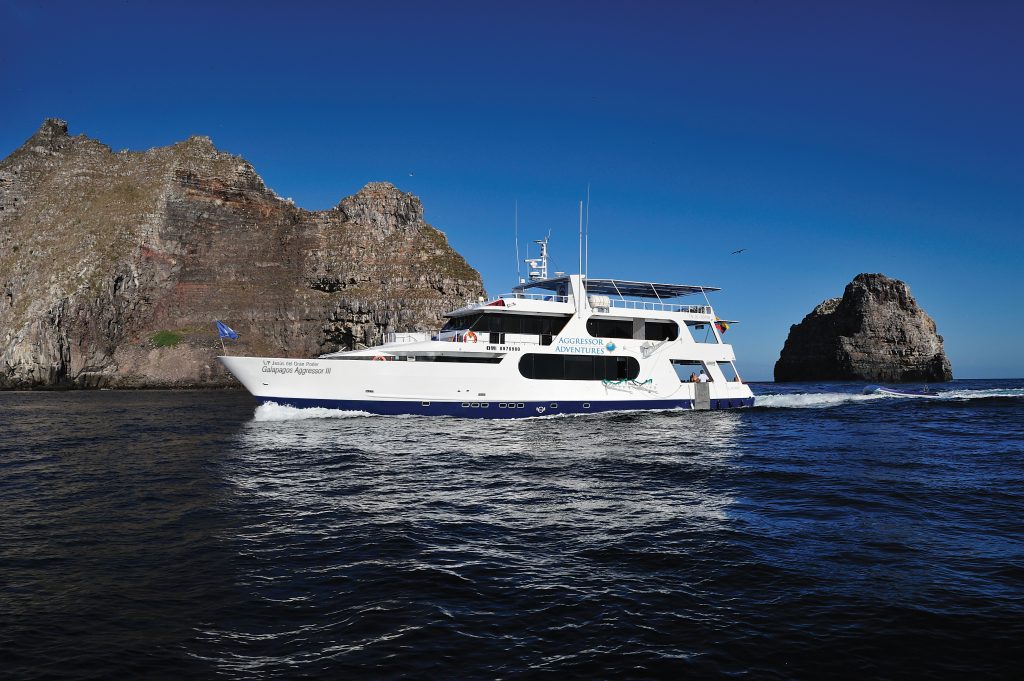
Aboard the Galapagos Aggressor III, guests explore an ecosystem famous for its large marine life while still having opportunities to discover smaller creatures hiding among the rocks and reef.
Giant frogfish are among the unexpected finds around Punta Carrion, where they can sit almost motionless against the reef while seahorses, rays, sea turtles, and whitetip reef sharks go about their day nearby.
The Galapagos also has its own interesting frogfish diversity. The Charles Darwin Foundation’s Galapagos Species Database records both the giant frogfish and the sanguine, or bloody, frogfish in the islands. The sanguine frogfish is an eastern Pacific species known for blending extremely well into rocky reef environments.
It is a perfect reminder that even in a destination famous for giants, some of the most rewarding encounters can happen when you stop looking into the blue and start examining what is right in front of you.
Galapagos Aggressor III 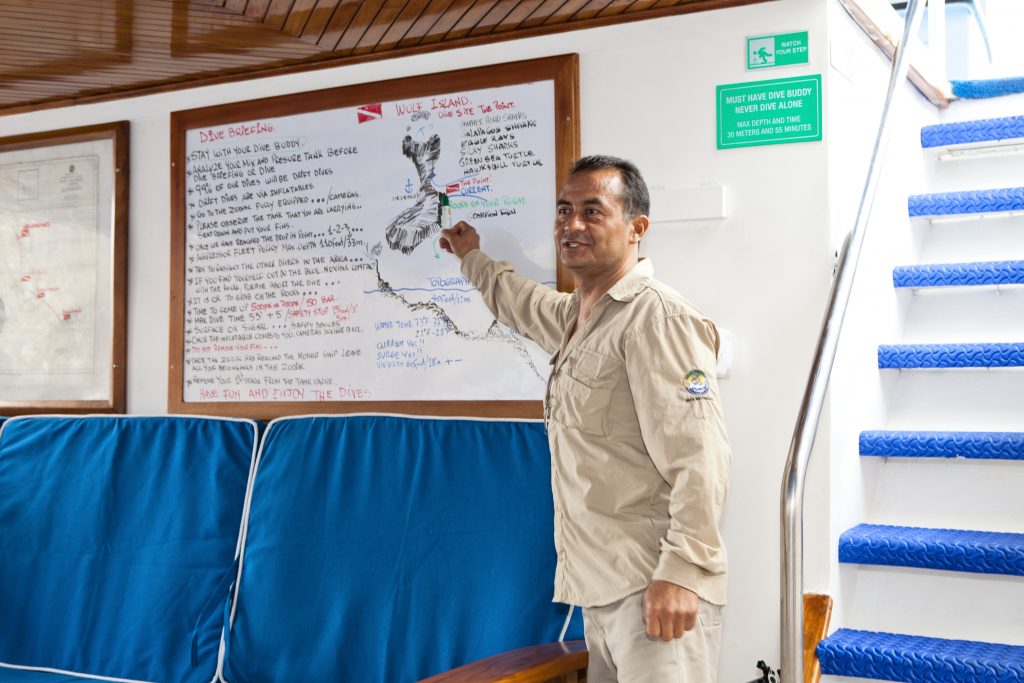
Find the Master of Disguise with Aggressor Adventures
Finding a frogfish takes patience, a sharp eye, and sometimes a little help from someone who knows exactly where to look.
That is one of the many advantages of exploring the world’s great diving destinations aboard an Aggressor Adventures liveaboard.
Instead of planning individual day trips and repeatedly traveling to and from dive sites, your yacht becomes your home base for the adventure. Dive, return to the yacht, relax, enjoy a meal or snack, talk about what you just saw and get ready to do it all again. Many yachts also provide fish identification resources, so you can put a name to that strange creature you photographed earlier in the day.
Most importantly, a liveaboard is about maximizing the experience of being in the destination. The more time you spend underwater, the more opportunities you have for those encounters that become the stories you tell when you return home.
Maybe it is your first manta ray.
Maybe it is a wall of hammerheads.
Or maybe it is the moment your dive guide points toward what appears to be an ordinary sponge, and after several confused seconds, you finally see the eye staring back at you.
This Halloween, some of the best costumes are not found on land.
They are hidden beneath the surface.
So, on your next frogfish diving adventure, slow down. Look closely. Check the sponges, examine the reef, and pay attention to anything that looks just a little too unusual.
You never know when the ocean’s master of disguise might be hiding in plain sight.
Discover your next adventure with Aggressor Adventures and experience an Adventure of a Lifetime.