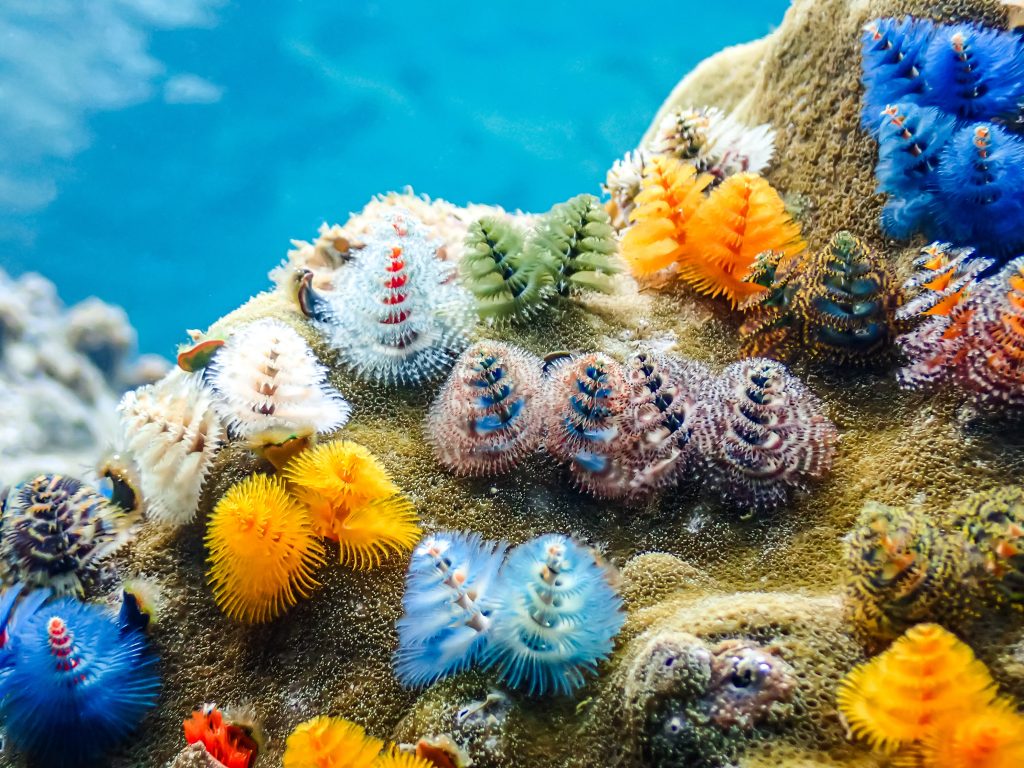
As the holidays approach and reefs shimmer with life, few ocean creatures feel more seasonally perfect than the Christmas Tree Worm (Spirobranchus giganteus). With its candy-colored spirals and fir-like form, this tiny marvel is the underwater world’s version of a festive decoration. It is bright, whimsical, and full of surprising science. If you’re planning your next liveaboard adventure, these eye-catching reef residents offer a fantastic “creature feature” for divers and snorkelers alike. Here’s your deep dive into what they are, how they live, and the best Aggressor Adventures destinations to put them on your holiday wish-list.
Meet the Christmas Tree Worm
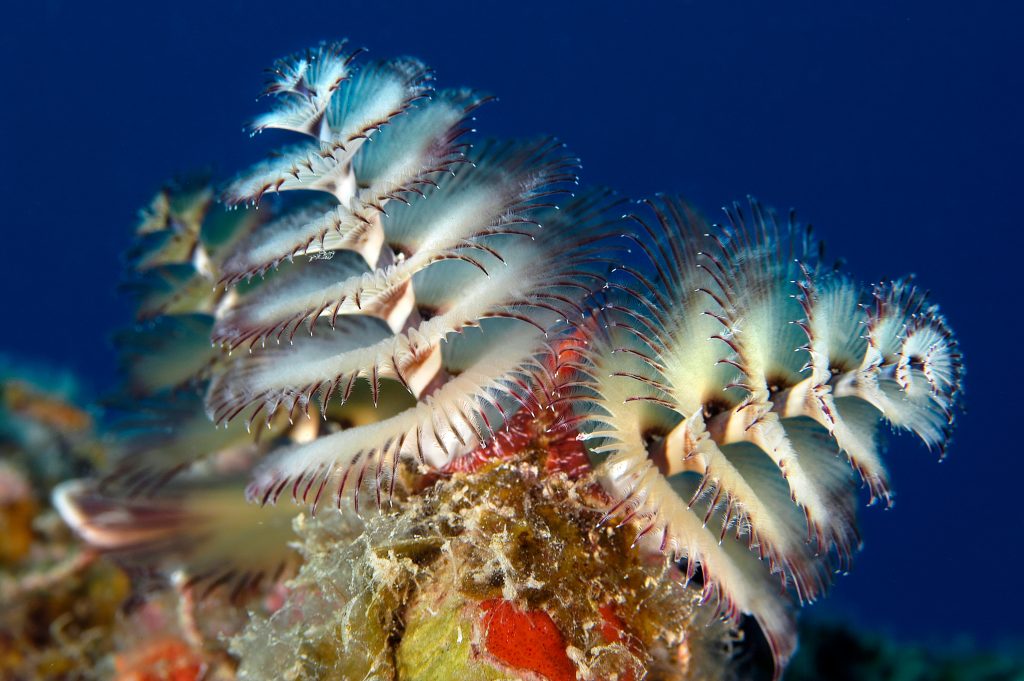
The Christmas Tree Worm is a tube-dwelling polychaete, meaning it’s a segmented marine worm that builds itself a protective tube, often right into a coral head. The iconic “trees” you see are not the worm’s entire body but rather its radioles: delicate, feathery spirals used for filter-feeding and respiration. Arranged in two corkscrew crowns, these radioles sweep plankton and tiny organic particles from the water. When startled by shadows or a passing parrotfish, the worm retracts those crowns with lightning speed into its calcified home and seals the opening with an operculum which is its built-in door.
What’s in a Color?
Christmas Tree Worms come in dazzling color morphs. These colors include blue, orange, yellow, white, red, brown, teal, and even candy-striped combinations. Their vibrant hues are not just for show; pigmentation and microstructures help optimize light exposure and camouflage while minimizing predation. On a busy reef full of corals, tunicates, anemones, and sponges, these tiny “trees” can be surprisingly easy to miss—until you tune your eyes and begin scanning coral heads for those perfect spirals.
Coral Real Estate
Unlike many free-roaming worms, Christmas Tree Worms are homebodies. Juveniles settle on living coral (often massive corals like Porites), and the coral grows around their tube, creating a long-term cohabitation. The worm benefits from a sturdy refuge and good flow for feeding, while the coral tolerates its tiny tenant. This relationship highlights how healthy reefs knit together species into complex, resilient communities and why protecting reef ecosystems is essential.
Behavior You Can See (and Photograph)
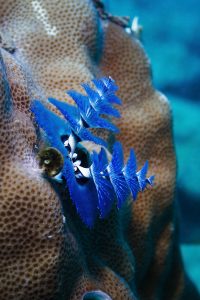
One of the joys of observing Christmas Tree Worms is how interactive they feel. Move your hand, shift your light, or let a fish pass and whoosh, the crowns vanish inward in a split-second retraction. If you hold steady, they reemerge cautiously, unfurling back into full pom-pom glory. This makes them a favorite subject for macro photographers and curious divers learning buoyancy.
Pro Tip for Divers and Snorkelers:
- Go slow. Keep your profile low and maintain trim to avoid casting sudden shadows.
- Control your light. Bright beams or abrupt illumination can trigger retraction.
- Use gentle finning. Avoid fin kicks near coral heads to prevent stirring sediment (and protect the reef).
- Shoot macro. A 60mm or 100mm macro lens helps bring out those fine radioles and vivid color bands.
- Patience pays off. Wait for reextension and aim for a clean, contrasting background.
Where to See Christmas Tree Worms with Aggressor Adventures
You can find Christmas Tree Worms throughout tropical reefs worldwide, including the Caribbean, Red Sea, and Indo-Pacific. If you want to build your holiday dive around spotting them, here are standout Aggressor Adventures liveaboard destinations:
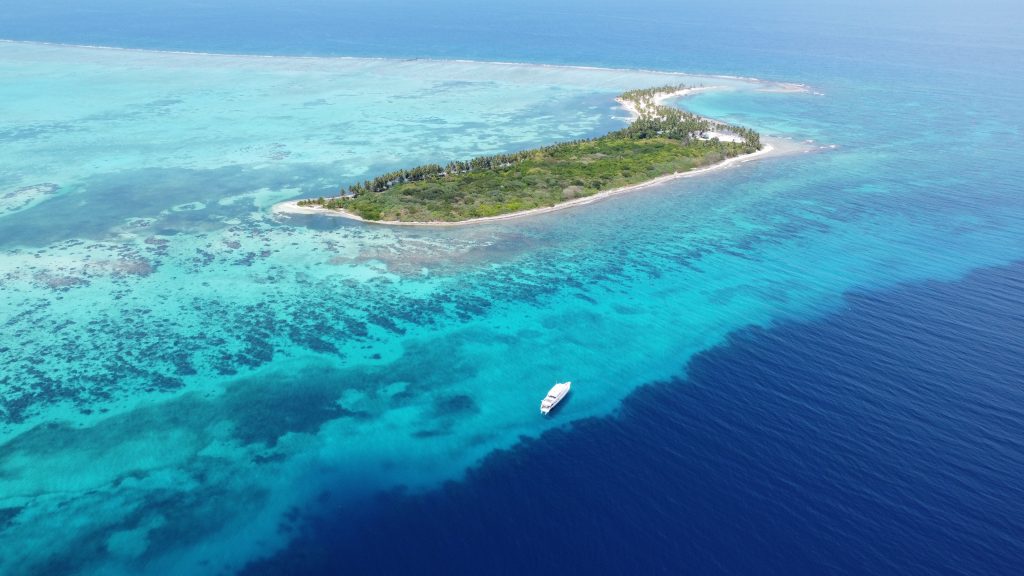
1. Belize – Turneffe Atoll & Lighthouse Reef
- Why it’s perfect: Massive coral heads and gentle slopes create ideal habitat for Christmas Tree Worms. You’ll spot them on brain corals and massive Porites while cruising slow along the reef line.
- Trip highlights: Dive sites near Turneffe and Lighthouse Reef include calm, clear conditions, great for macro and holiday-themed photography. Keep an eye on colorful crowns along coral heads and ledges.
- Aggressor tie-in: The Belize Aggressor III & Belize Aggressor IV offers week-long itineraries with multiple dives daily, more chances to tune your eyes and capture the perfect spiral.
2. Roatan – Bay Islands, Honduras
- Why it’s perfect: Roatan’s fringing reefs and patch reefs are textbook worm territory. You’ll see vibrant colonies on shallow coral heads, ideal for long bottom times.
- Trip highlights: Excellent visibility and sheltered sites make Roatan a superb destination for macro hunting and seasonal underwater “ornament” spotting.
- Aggressor tie-in: The Roatan Aggressor delivers easy-access, relaxed diving that’s ideal for divers practicing buoyancy and macro photography.
3. Palau – Indo-Pacific Showstopper
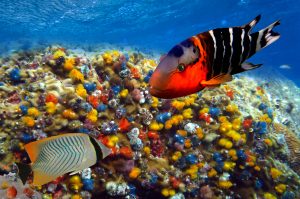
- Why it’s perfect: Palau’s biodiversity means you’ll find Christmas Tree Worms in an astonishing array of colors. While you may come for channels and pelagics, take time on sheltered reefs and coral gardens.
- Trip highlights: After a heart-racing drift in German Channel or Blue Corner, enjoy a mellow macro dive on coral gardens, scanning for bright crowns and festive pairs.
- Aggressor tie-in: The Palau Aggressor II itinerary balances big-animal excitement with macro magic that’s giving you the best of both worlds.
4. Raja Ampat – The Heart of Coral Diversity
- Why it’s perfect: Raja Ampat is the biodiversity capital of coral reefs, and Christmas Tree Worms thrive across its coral gardens and bommies.
- Trip highlights: Slow, shallow dives around mangrove edges and sheltered bays often reveal dense worm colonies. Look for photogenic contrasts—their bright spirals against chocolate-brown corals, pastel sponges, or seagrass backdrops.
- Aggressor tie-in: The Raja Ampat Aggressor routes include rich macro-opportunities that’s ideal for patient worm watchers.
5. Maldives – Atolls of Color
- Why it’s perfect: Maldivian reef flats and thilas (pinnacles) feature corals that host plenty of Christmas Tree Worms. Good light, clear water, and easy conditions make them a holiday favorite.
- Trip highlights: Between manta cleaning stations and sharky channels, pencil in a thila with coral gardens for macro time. This is perfect for capturing blue-and-yellow morphs.
- Aggressor tie-in: A Maldives Aggressor II schedule offers flexible site selection and extended macro windows.
Bonus regions where they’re commonly seen: The Red Sea, Fiji, and Oman also feature abundant coral communities where Christmas Tree Worms are frequently encountered.
How to Dive “Festively” (Without Disturbing the Reef)
Holiday excitement doesn’t have to mean heavy finning. Here’s a simple, reef-safe playbook:
- Perfect your hover. A gentle frog kick and neutral buoyancy let you get close without contacting coral.
- Plan your shots. Compose before you approach so you don’t linger in a way that stresses the animal.
- Use brief, soft lighting. Diffuse strobes, avoid blasting at close range, and respect the worm’s retraction behavior as a signal to slow down.
- No-touch rule. Never rest on coral or handle marine life. Your patience gets you better behavior and better photos.
- Log your sightings. Noting sites and depths can help you anticipate where worm colonies are densest on future dives.
The Science of the “Tree”
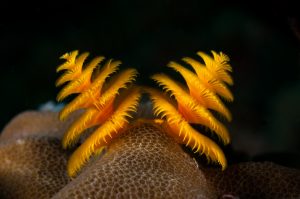
The two spirals aren’t just pretty; they’re engineering marvels. Each crown consists of many radioles lined with tiny hair-like cilia. These cilia create water currents that funnel plankton toward the worm’s mouth. Their spiral geometry optimizes surface area for feeding while minimizing drag. When danger looms, a specialized muscle action retracts the radioles in a flash. The worm’s tube, created from calcium carbonate and secreted mucus, is integrated into the coral skeleton. Over time, this micro-architecture becomes part of the reef’s living tapestry.
A Holiday Macro Challenge
If you’re traveling with Aggressor Adventures in December, try a festive macro challenge:
- Find five color morphs of Christmas Tree Worms in one week.
- Photograph the “reveal.” Capture a sequence of retraction and reextension (without repeatedly provoking the animal. Patience and timing are key).
- Coral ID + Worms. Pair your worm portraits with host coral identifications to deepen your naturalist chops.
Share your best shots and tag Aggressor Adventures! Your “underwater ornaments” might inspire someone else’s next liveaboard holiday.
Why Liveaboards Make the Difference
To meaningfully experience creatures like the Christmas Tree Worm, time on site is everything. Liveaboards give you:
- Multiple dives per day, maximizing calm-water macro windows.
- Variety of sites, so you can target coral gardens where worms are common.
- Expert guides, who know exactly which bommies host dense colonies.
- Consistent conditions, thanks to flexible itineraries and moorings that protect reef structure.
With Aggressor Adventures, you’ll enjoy five-star service, professional crews, and itineraries tailored for both big-animal thrills and macro wonderlands. This is the perfect blend for a holiday dive story you’ll remember long after the lights come down.
Wrap It Up Like a Present
Whether you’re nosing along the coral heads of Belize’s Turneffe Atoll, hovering over Roatan’s patch reefs, or drifting across Palau and Raja Ampat’s coral gardens, the Christmas Tree Worm offers a joyful, meditative counterpoint to adrenaline dives. Their tiny spirals invite you to slow down, breathe steady, and appreciate the intricate life that makes reefs extraordinary.
This holiday season, consider a liveaboard with Aggressor Adventures. Pack your macro lens, polish your buoyancy, and put “underwater ornaments” on your shot list. The ocean has its own way of celebrating, and these festive little engineers are ready to make your next dive feel like Christmas underwater.